
1924 - On loan to and exhibited at KMSK Antwerp (BE) until 2032
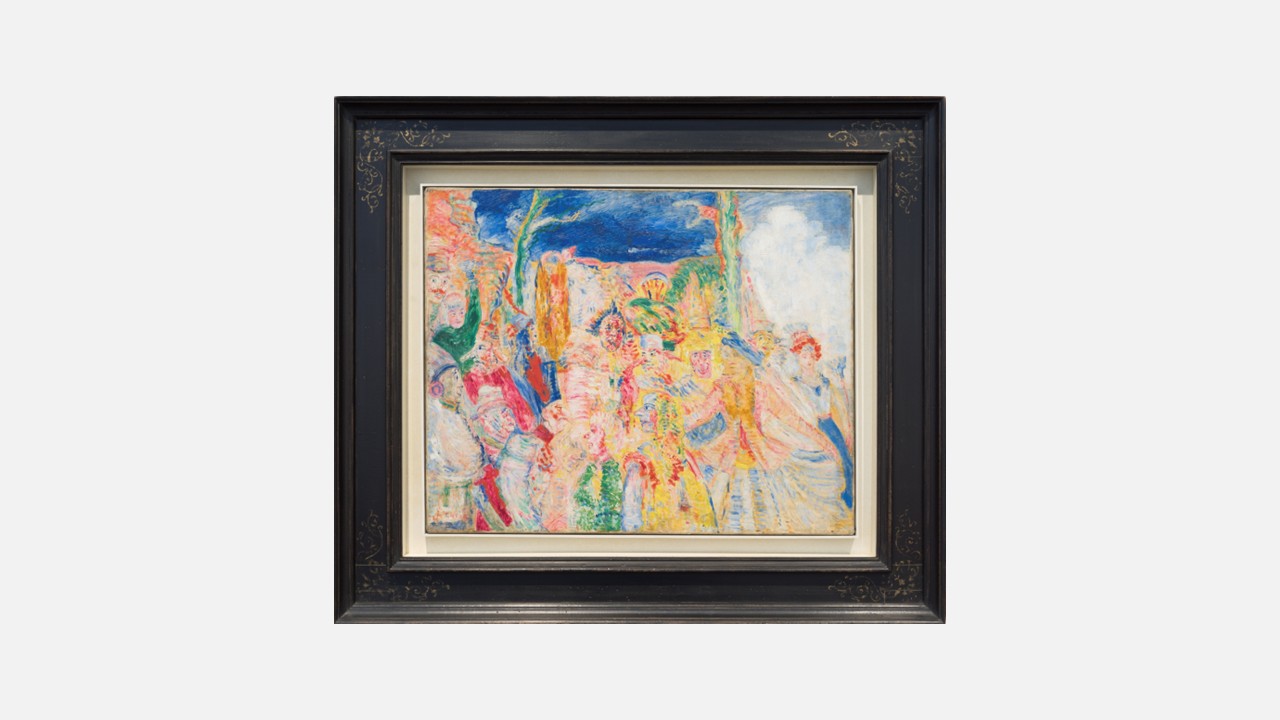
Asset
Carnaval de Binche 1924
Oil on canvas, 76 x 61 cm
James Ensor
Rubey Category
Classical art
Key Fact Highlight
Museum-grade painting by one of Belgium’s most important modern artists
Production Year
1924
Condition
Satisfactory condition
Confirmed by independent expert study prior to acquisition
Provenance
Acquired from a previous private owner in Belgium
Included in the catalogue raisonné by Xavier Tricot
Catalogue raisonné number 526
Museum Exhibition
In custody of the Royal Museum of Fine Arts Antwerp (KMSKA)
Museum custody agreement in force
Legal Structure
Tokenised debt instrument
Issued by Rubey Paintco1 S.à r.l.
Luxembourg limited liability company
Total Offering Size
€1.410.000
Total Token Supply
1.000.000
Cost Structure
All costs included upfront
One-time margin of 17,5% on acquisition price
No annual management fees
No performance fees
Holding Period
Maturity date: 8 February 2032
Issuer may extend maturity up to three times by one year each
Maximum maturity: February 2035
Exit Strategy and Liquidity
Primary exit via sale of the artwork and repayment at maturity
Early repayment possible subject to contractual conditions
Secondary liquidity may be available via a bulletin board on the Rubey platform after the public offer phase
No guarantee of secondary market liquidity
Investment Ticket Size
From €250 to €10.000
Risk Profile
Debt instrument with limited recourse
Repayment dependent on realisation proceeds of the artwork
Capital at risk
Target IRR
Indicative target IRR: 8–12% net annually
Not guaranteed
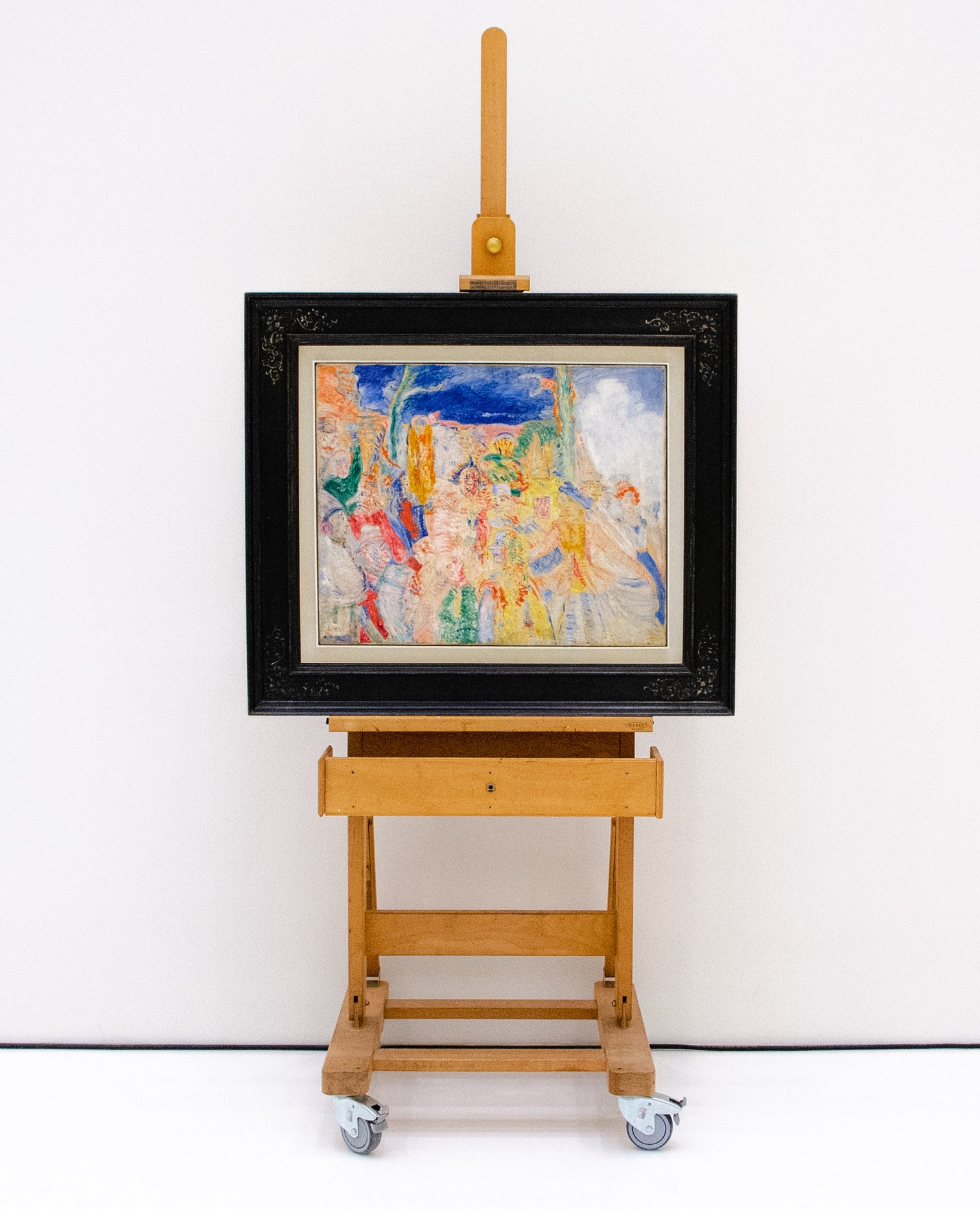
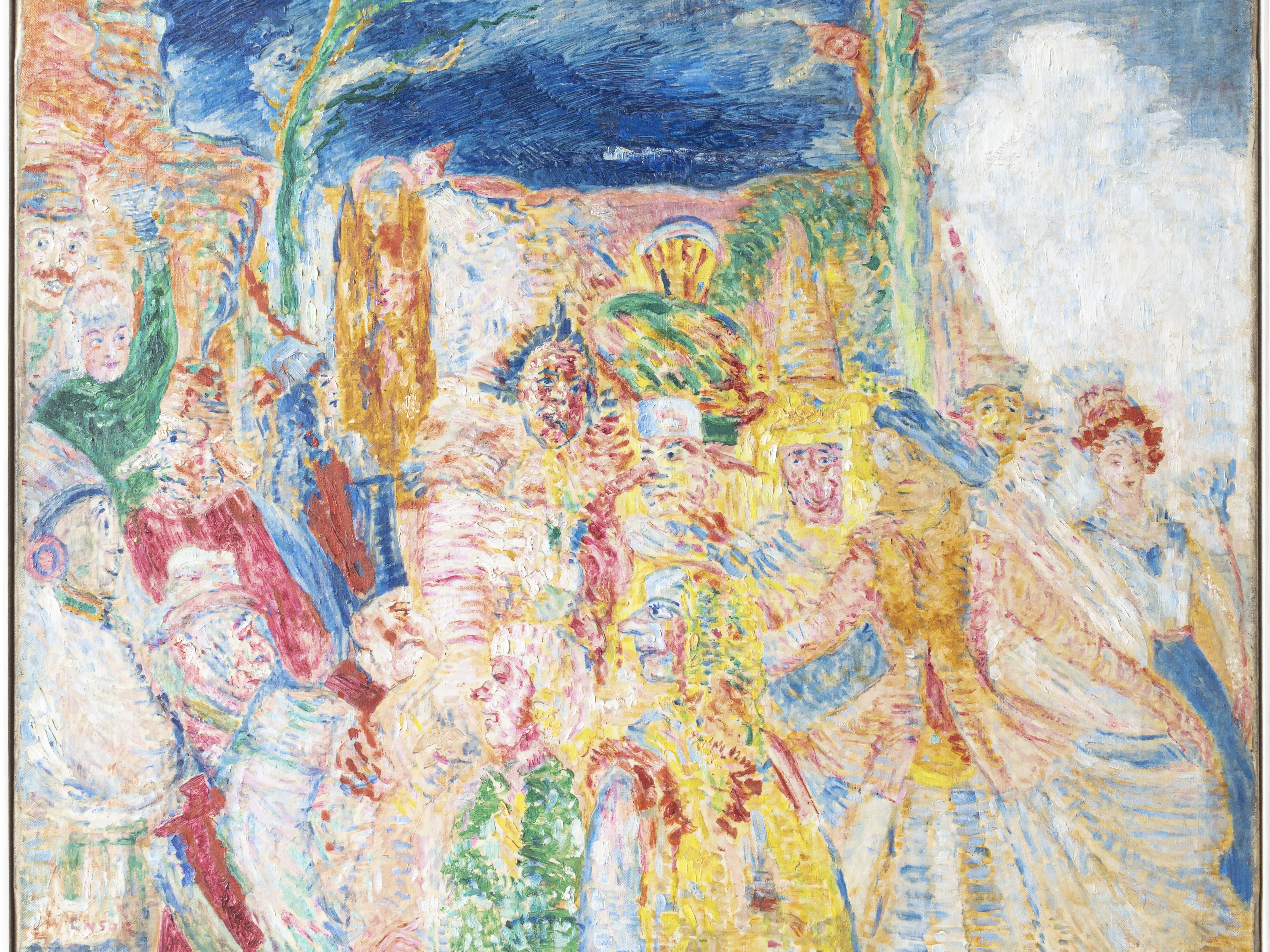

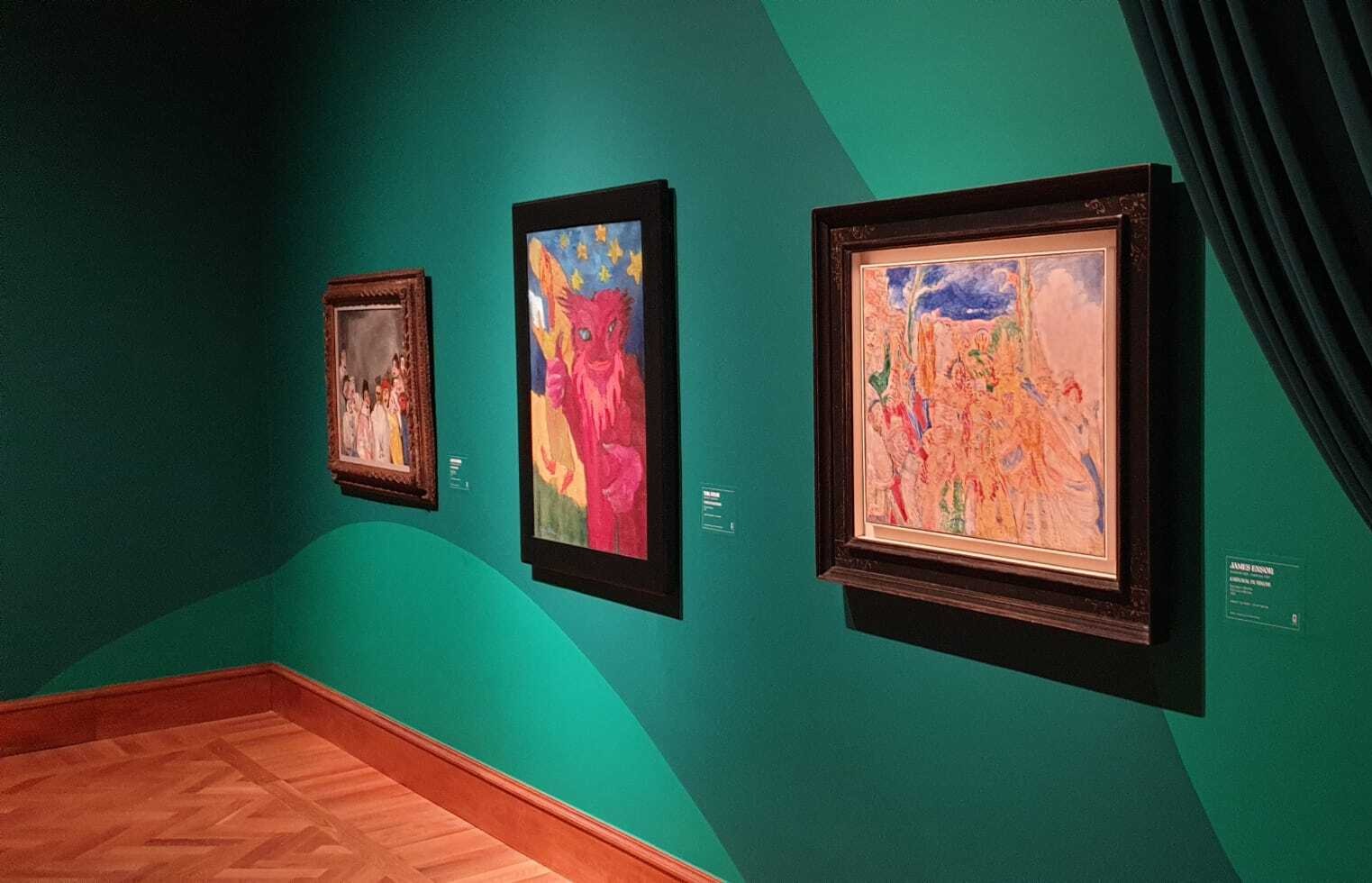
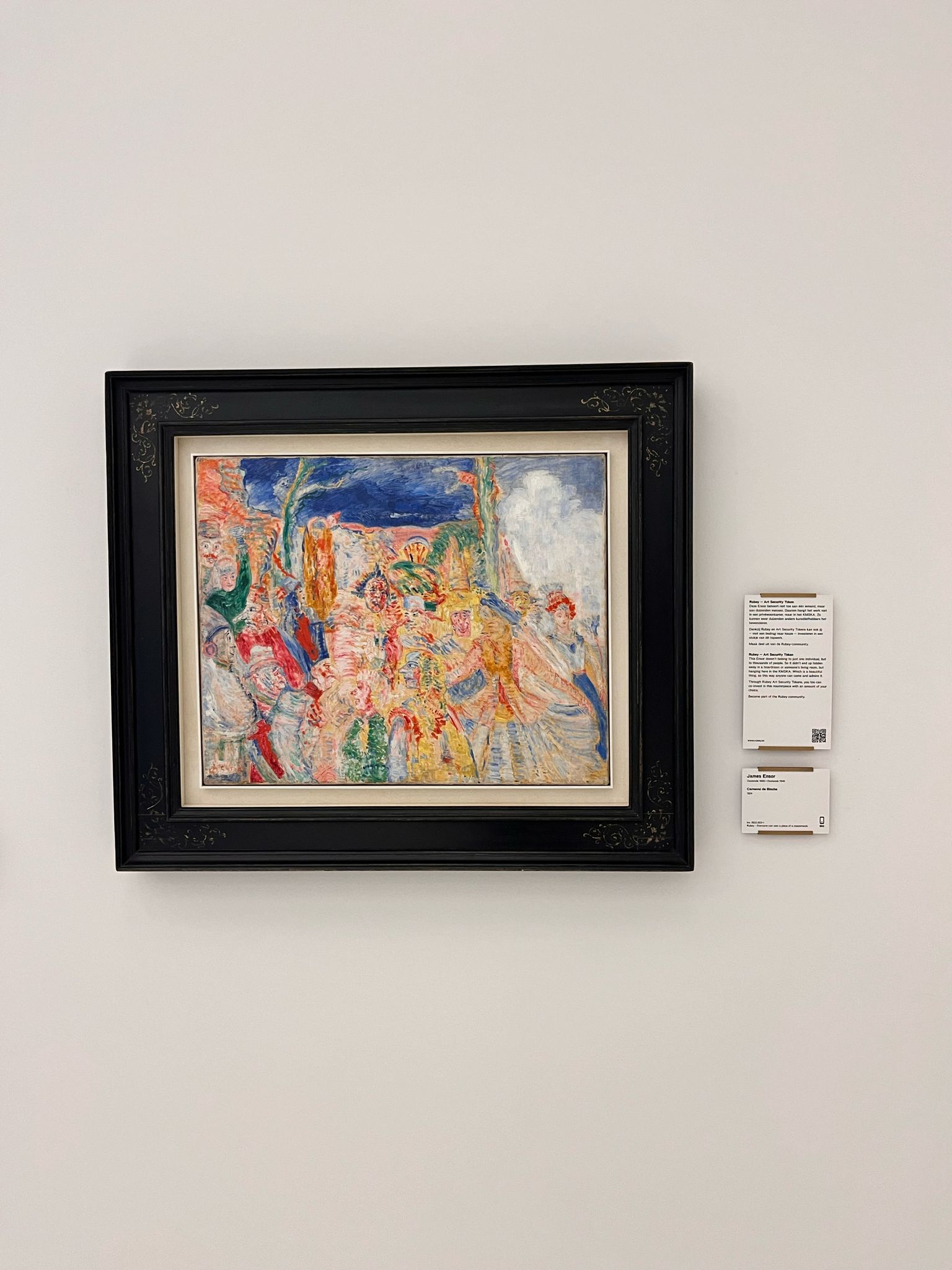
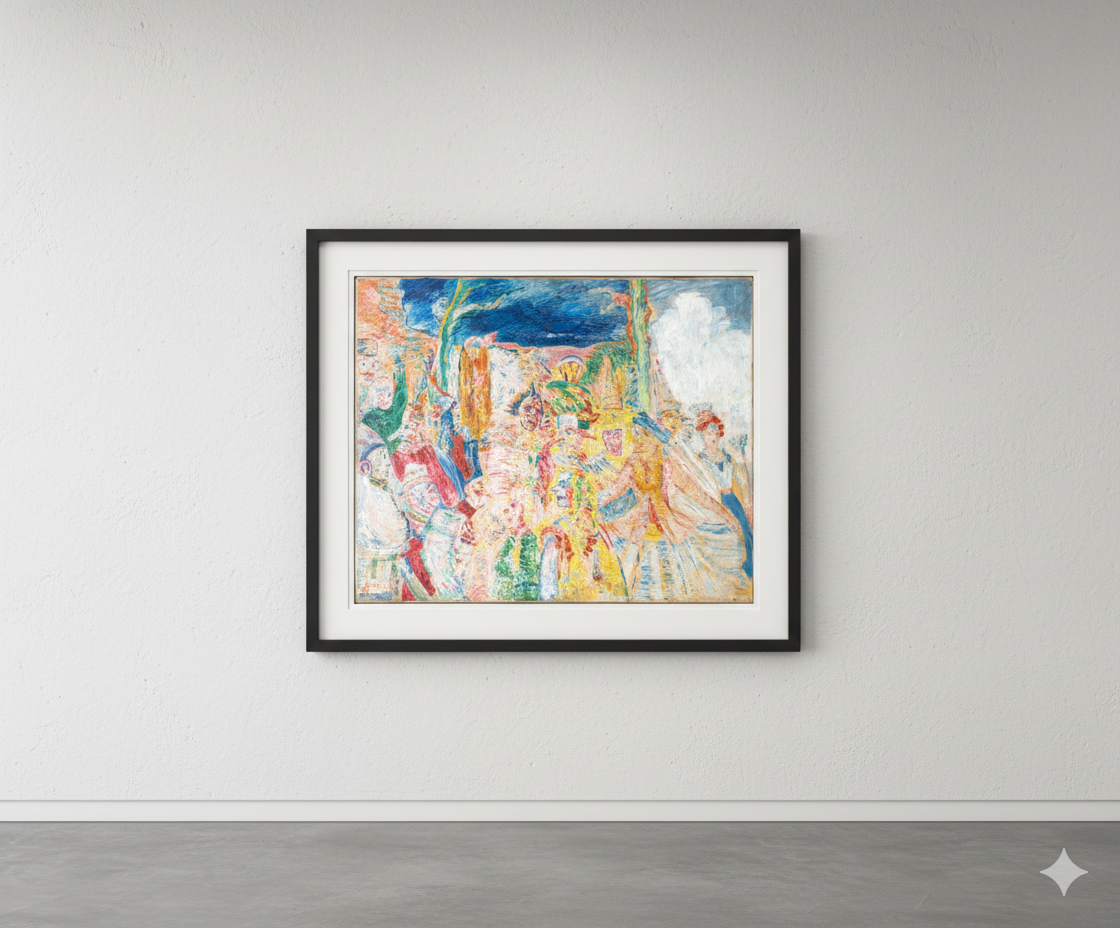
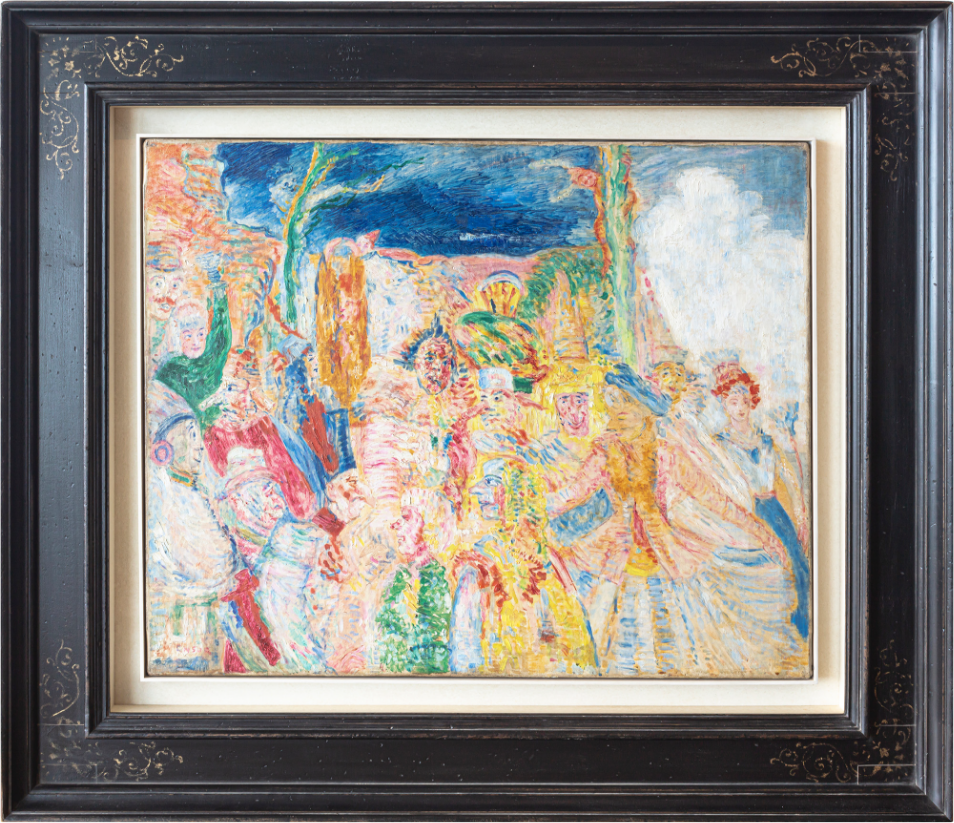
Carnaval de Binche 1924 is a mature and emblematic work by James Ensor, one of Belgium’s most influential artists and a key figure in the transition from nineteenth-century symbolism to modern art.
Carnival imagery occupies a central place in Ensor’s artistic universe. From the late nineteenth century onward, masks, grotesque figures, and processions became recurring motifs through which he explored themes of social hypocrisy, identity, and the tension between appearance and reality. In Ensor’s work, the mask does not serve to conceal but to reveal. It exposes the absurdities, anxieties, and contradictions of human behaviour and society.
Painted in 1924, Carnaval de Binche belongs to Ensor’s later creative period. This phase, long misunderstood as a decline, is now recognised by art historians as a period of renewed freedom and stylistic synthesis. During these years, Ensor revisited earlier themes with greater clarity, intensified colour, and a more confident compositional structure. Elements such as humour, ornamentation, narrative density, and the grotesque, often associated with much later artistic movements, are fully present in this work.
The painting refers to the carnival tradition of Binche, a city whose carnival is today recognised as UNESCO Intangible Cultural Heritage. Ensor’s interpretation is neither documentary nor folkloric. Although the title refers explicitly to Binche, the iconic Gilles figures traditionally associated with the carnival are absent. Instead, the composition is populated by elegant women, military figures, masked characters, and grotesque faces. This deliberate choice transforms a local tradition into a symbolic and universal scene, detached from a specific moment or event.
Art historically, Carnaval de Binche 1924 occupies a specific position within a small group of related carnival scenes. It is an expanded and refined version of an earlier composition painted around 1890, a work that remained largely unseen during Ensor’s lifetime. The later version distinguishes itself through stronger contrasts, a more luminous palette, and a heightened sense of spatial organisation. Ensor himself considered this painting important enough to include it in his major retrospective exhibition of 1929, as well as in subsequent exhibitions in Amsterdam and Paris.
The painting is included in the authoritative catalogue raisonné compiled by Xavier Tricot, which confirms its authenticity, dating, and place within Ensor’s recognised body of work. Its documented provenance and exhibition history anchor it firmly within the scholarly and institutional understanding of Ensor’s oeuvre.
Today, Carnaval de Binche 1924 is held in custody by the Royal Museum of Fine Arts Antwerp. Institutional custody ensures professional conservation and positions the work within Belgium’s public cultural heritage. The museum has not only exhibited the work locally but has also included it in international exhibition programming, such as a temporary presentation in Warsaw, Poland. These temporary exhibitions extend the painting’s public exposure beyond its home collection and contribute to its cultural footprint in an international context.
Within a museum setting, the painting continues to contribute to the understanding of Ensor’s lasting impact on modern art, not only as a historical artifact, but as a work whose themes and visual language remain strikingly relevant.
James Ensor holds a firmly established position within the international canon of modern art. He is widely recognised as one of the most important Belgian artists of the late nineteenth and early twentieth centuries, and as a precursor to later modernist and expressionist movements. His work is represented in major museum collections across Europe and North America, including the Royal Museum of Fine Arts Antwerp, the Musée d’Orsay, and the Museum of Modern Art in New York.
Within the art market, Ensor is regarded as a blue chip artist with sustained institutional demand and a stable international collector base. Works from key thematic groups such as carnival scenes, mask compositions, and socially satirical subjects are particularly sought after and form the core of museum and private collections.
Public auction data over several decades show that museum grade paintings by James Ensor have demonstrated long term value resilience and appreciation, particularly for works that combine strong subject matter, clear dating, and robust provenance.
Prices for Ensor paintings vary depending on period, scale, condition, and exhibition history. Works included in the catalogue raisonné and supported by institutional documentation tend to achieve higher sale probabilities and stronger price outcomes than comparable works without such characteristics.
While the art market is cyclical and subject to periods of reduced liquidity, the long term price trajectory for high quality Ensor paintings has been upward over extended holding periods, supported by limited supply and sustained scholarly and museum interest.
A central element of Rubey’s investment thesis is that institutional recognition and public exhibition materially contribute to value formation in the art market.
This thesis is supported by academic research in cultural economics showing that artworks with documented exhibition history and museum involvement benefit from reduced information asymmetry, increased buyer confidence, and measurable price premia at sale. Institutional exposure functions as a form of third party validation that is recognised and priced by the market.
Carnaval de Binche 1924 is held in custody by the Royal Museum of Fine Arts Antwerp, placing the work within a leading national museum context. In addition to long term museum custody, the painting has been included in international exhibition programming, including a temporary exhibition in Warsaw, Poland. Such international loans extend the artwork’s public and institutional footprint beyond its home collection and contribute to its documented exhibition history.
Over time, repeated institutional exposure strengthens provenance through curatorial documentation, conservation records, and scholarly attention, all of which are relevant factors at the point of sale.
The artwork was acquired at a value reflecting an independently assessed market price at the time of purchase. The total offering price includes all costs upfront, including a one time margin, with no recurring management fees and no performance fees.
The issuer is a Luxembourg special purpose vehicle whose sole material asset is the artwork. As a result, investor outcomes depend primarily on the realised sale value of the painting at exit, rather than on financial leverage or operational performance.
The investment is structured with a long term holding horizon, allowing sufficient time for both market appreciation and the cumulative effects of institutional provenance enrichment.
Although the instrument is legally structured as a debt instrument, the economic return for investors is driven by the difference between the acquisition value and the eventual realisation value of the artwork.
Based on historical market behaviour for comparable Ensor works, observed price ranges, and the characteristics of museum grade paintings with international exhibition history, the following illustrative scenarios are used to frame potential outcomes. These scenarios are indicative and not guaranteed.
In a conservative scenario, assuming limited nominal appreciation over the holding period, the implied net internal rate of return would be approximately 2% to 3% per year.
In a base case scenario, reflecting long term appreciation consistent with historical trends for high quality Ensor paintings supported by institutional provenance, the implied net internal rate of return would be approximately 6% to 7% per year.
In an upside scenario, assuming favourable market conditions, sustained institutional demand, and full pricing of enhanced provenance resulting from long term museum custody and international exhibitions, the implied net internal rate of return would be approximately 9% to 11% per year.
On the basis of these scenarios, the project targets a net internal rate of return in the range of approximately 8% to 12% per year.
This target is not guaranteed and may materialise below or above the indicated range. It is provided as a reference point derived from historical market data, structural cost efficiency, and the expected impact of institutional exposure and provenance enrichment.
Investment in a single artwork involves inherent risks, including art market cyclicality, limited liquidity, changes in collector preferences, and uncertainty regarding the timing and price of exit. As repayment is dependent on the realisation proceeds of the artwork, a partial or total loss of invested capital remains possible.
The analysis and assumptions in this Market Context are informed by the following publicly available sources and academic research:
Tricot, Xavier. James Ensor. Catalogue raisonné des peintures. Mercatorfonds, Brussels.
Fraiberger, S., Sinatra, R., Resch, M., Riedl, C., and Barabási, A.-L. Quantifying reputation and success in art. Science, 2018.
Goetzmann, William N. Accounting for taste: Art and the financial markets over three centuries. American Economic Review.
Ashenfelter, Orley, and Graddy, Kathryn. Art auctions. Handbook of the Economics of Art and Culture.
Public auction records from Christie’s, Sotheby’s, and Bonhams relating to sales of works by James Ensor.
Royal Museum of Fine Arts Antwerp curatorial and custody documentation.
Rubey, Visit report: Black Carnival, Warsaw. Documentation of the temporary exhibition of Carnaval de Binche 1924 in Poland.
The investment in Carnaval de Binche 1924 by James Ensor is governed first and foremost by the Information Note and the Terms and Conditions of the offering. These documents constitute the only legally binding framework defining the rights, obligations, risks, and economic interests of investors.
Both the Information Note and the Terms and Conditions are made available in full in this section of the marketplace and can be consulted and downloaded prior to any investment decision.
This Trust Framework section provides a high level, non binding explanation of how the contractual arrangements are implemented in practice. It does not replace, amend, or override the legal documentation.
The issuer of the tokens is Rubey Paintco1 S.à r.l., a Luxembourg private limited liability company established as a special purpose vehicle.
The issuer’s sole material purpose is the holding and eventual realisation of the artwork. It does not conduct any operating business and does not hold material assets other than the painting and related cash balances.
The tokens represent contractual debt claims against the issuer with limited recourse, as defined in the Terms and Conditions.
The artwork is held in custody by the Royal Museum of Fine Arts Antwerp under a formal museum custody agreement.
The museum is responsible for professional conservation and handling, appropriate environmental and security conditions, and coordination of insurance coverage in line with institutional standards.
Museum custody places the artwork within a recognised institutional framework and ensures preservation in accordance with international museum practices.
A first ranking pledge has been granted over the artwork in favour of the investors, as defined in the Information Note and the Terms and Conditions.
The pledge is intended to secure the contractual claims of investors against the issuer and covers the artwork as the issuer’s principal asset.
In the event of enforcement, investors’ rights are limited to the proceeds realised from the pledged artwork, after settlement of applicable costs, as contractually defined.
The artwork is included in the authoritative catalogue raisonné compiled by Xavier Tricot, confirming its authenticity, dating, and position within the recognised oeuvre of James Ensor.
Independent expert studies were obtained prior to acquisition to confirm provenance and satisfactory condition. Ongoing documentation, conservation records, and exhibition history are maintained as part of the institutional custody framework.
Investor claims are subject to limited recourse. Repayment depends on the net realisation proceeds of the artwork following its sale.
The issuer does not provide any guarantee of repayment and has no obligation to repay amounts beyond the value realised from the artwork, after settlement of applicable costs.
There is no recourse to Rubey BV or any other entity beyond the issuer, except as explicitly defined in the Terms and Conditions.
Investor interests are digitally represented through security tokens. These tokens constitute a technical representation of the contractual rights defined in the Terms and Conditions.
Safeguards include mandatory KYC and AML verification for all investors, restricted transferability in accordance with the Terms and Conditions, a legally decisive off chain register maintained by or on behalf of the issuer, and alignment between the contractual investor register and the digital token records.
In the event of discrepancy, the contractual register prevails over any on chain record.
The structure is designed to align the interests of the issuer and investors. The issuer holds no assets other than the artwork, does not use leverage or external financing, and discloses all costs upfront in the issue price. There are no recurring management fees, and repayment outcomes depend solely on the realised value of the artwork.
In accordance with the Information Note and the Terms and Conditions, investors receive periodic updates on the artwork, its custody, and exhibition status, information on valuation events when available, advance communication regarding any contemplated sale, and transparent reporting on proceeds and allocations at maturity or early repayment.
This investment relates to the artwork Carnaval de Binche 1924 by James Ensor and is structured as a single asset offering through a tokenised debt instrument.
Investors subscribe to debt tokens issued by a Luxembourg special purpose vehicle. Repayment depends on the realisation value of the underlying artwork, as defined in the contractual documentation.
Issuer
Rubey Paintco1 S.à r.l.
Jurisdiction
Luxembourg
Instrument type
Tokenised debt instrument with limited recourse
Underlying asset
One single artwork
Carnaval de Binche 1924 by James Ensor
The rights and obligations of investors are defined exclusively in the Information Note and the Terms and Conditions.
Total offering size
€1.410.000
Use of proceeds
Financing of the acquisition, holding, insurance, custody, structuring, and administration of the artwork
Subscription period
As defined in the Information Note
Eligibility
Participation subject to successful KYC and AML verification
Minimum investment
€250
Maximum investment per investor
€10.000, unless exceptionally approved by the issuer
Acquisition price of the artwork
€1.200.000
Issuer margin
One time margin of 17,5% on the acquisition price
Included costs
All structuring, legal, compliance, custody, insurance, valuation, reporting, and administration costs are included in the issue price
Ongoing fees
None charged annually to investors
Performance or success fees
None
All costs are disclosed upfront in the Information Note.
Initial maturity date
8 February 2032
Extension options
The issuer may extend maturity up to three times by one year each
Maximum maturity
February 2035
The holding period is designed to allow sufficient time for market appreciation and provenance enrichment through institutional exposure.
Primary exit
Sale of the artwork through a private transaction, gallery sale, or auction
Repayment mechanics
Repayment of principal and any surplus depends on the net realisation proceeds of the artwork
Early repayment
Possible under the conditions defined in the Terms and Conditions, including minimum price thresholds
There is no guarantee that a sale will occur at or before maturity, or at a specific price.
During the public offer phase, tokens are not transferable
After the public offer phase, tokens may be transferred via a bulletin board or peer to peer mechanism on the Rubey platform
All transfers are subject to KYC and AML verification
No guarantee is given that a secondary market will develop
Investors have a contractual claim against the issuer with limited recourse
Repayment depends on the net proceeds from the sale of the artwork
Investors do not acquire ownership or usage rights over the artwork
The issuer does not engage in leverage or external financing beyond the issued debt
Investment in this offering involves specific risks, including:
dependence on a single underlying asset
art market volatility and liquidity constraints
uncertainty regarding timing and price of exit
limited recourse to the issuer
potential partial or total loss of invested capital
A detailed description of risks is included in the Information Note and should be reviewed carefully prior to investing.