
1965 - On loan to and exhibited at Autoworld Brussels (BE) until 2035
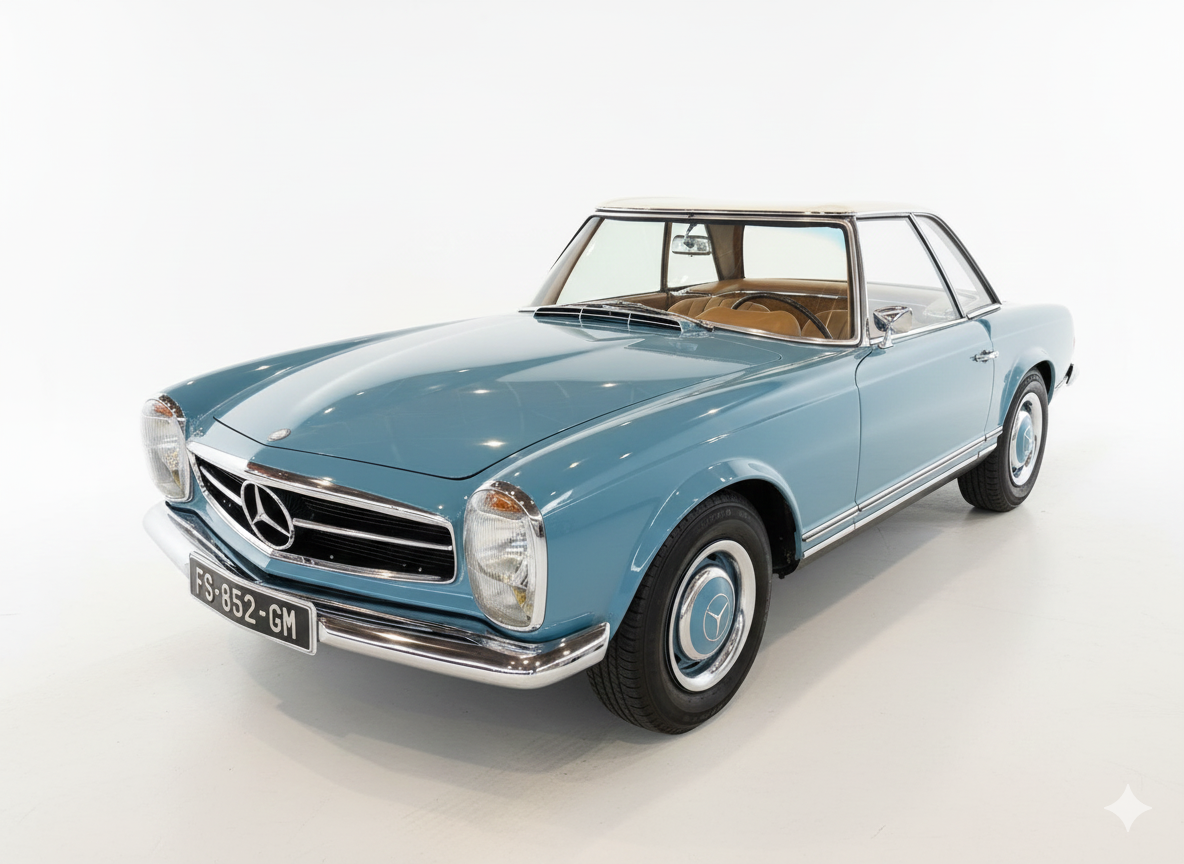
Asset
Mercedes 230 SL Pagode W113
Rubey Category
Collectible car
Key Fact Highlight
First‑generation Mercedes-Benz 230 SL ‘Pagoda’, a 1960s design icon that combined elegant Paul Bracq styling with pioneering safety engineering and has since become one of the most recognisable and sought‑after classic SL models.
Production Year
1965
Condition
Restored. Excellent.
Provenance
Acquired from SAGA
Restored by Paris Pagode in 2020
Museum Exhibition
On long-term loan to Autoworld Brussels
Planned duration: 10 years
Legal Structure
Single Asset Project
Belgian simple partnership
Total Offering Size
€168.750
Total Token Supply
1.000.000
Cost Structure
All costs included upfront
One-time margin of 25% on acquisition price
No annual management fees
No performance fees
Holding Period
Target holding period: 10 years
Exit possible from year 8 onwards
Exit Strategy and Liquidity
Primary exit via sale of the asset through private transaction, specialised dealer, or international auction
Secondary liquidity via peer-to-peer trading on the Rubey platform after the subscription period
Transfers subject to KYC and platform rules
No guarantee of liquidity
Investment Ticket Size
From €250 to €10.000
Risk Profile
Single-asset investment
Long-term horizon
Capital at risk
Target IRR
8–12% net annually
Not guaranteed
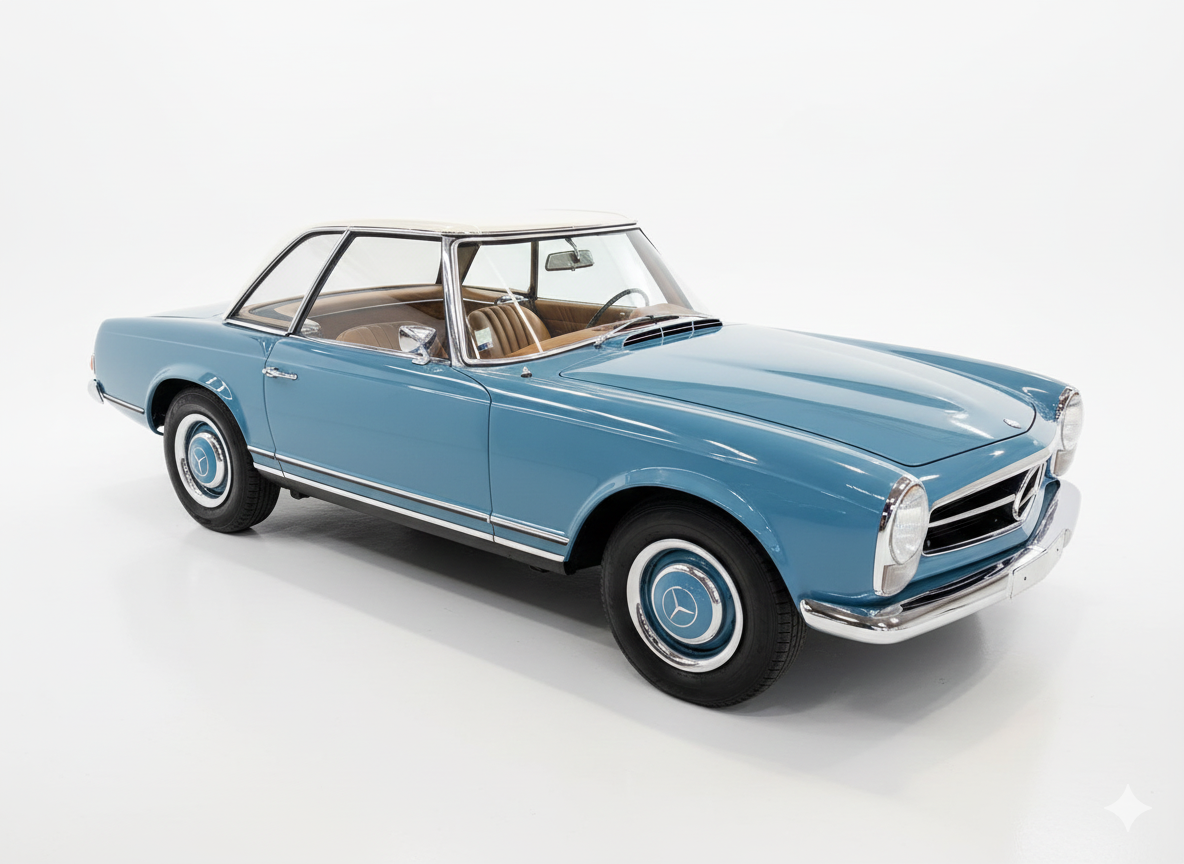
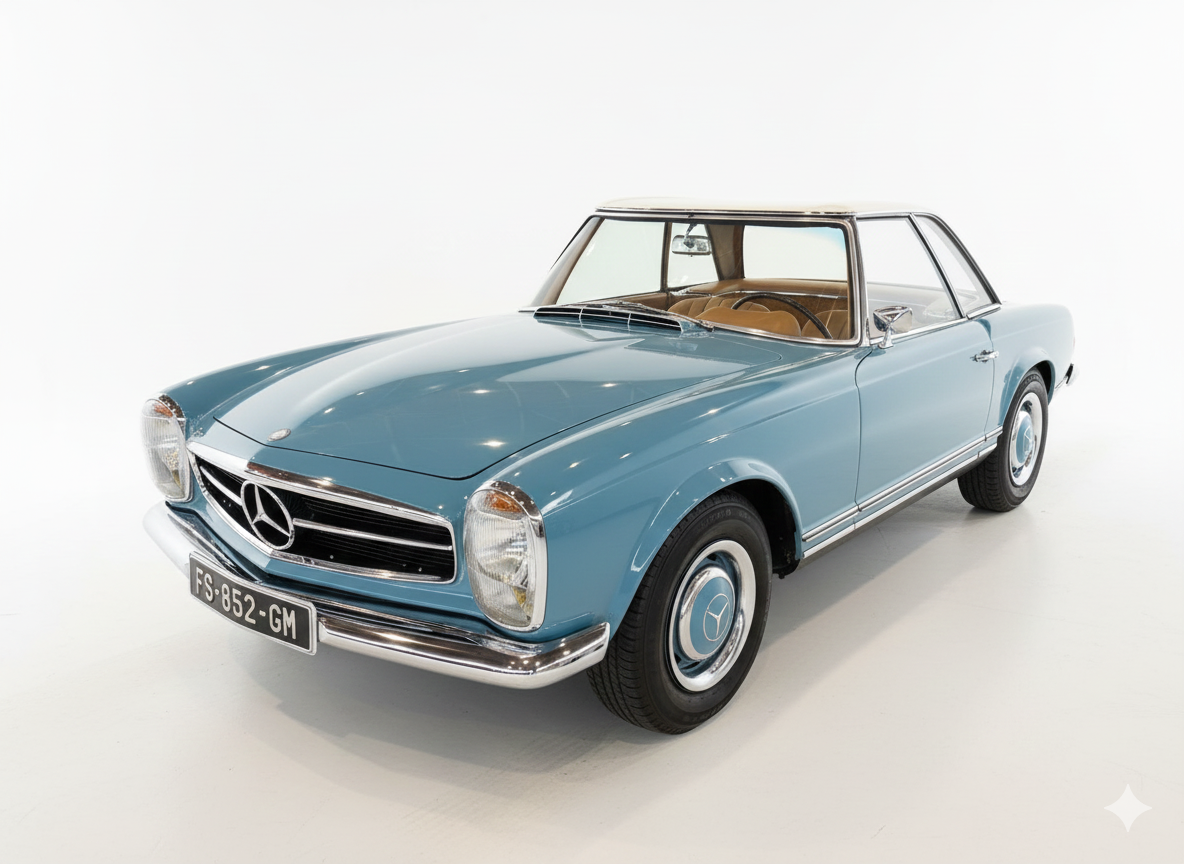
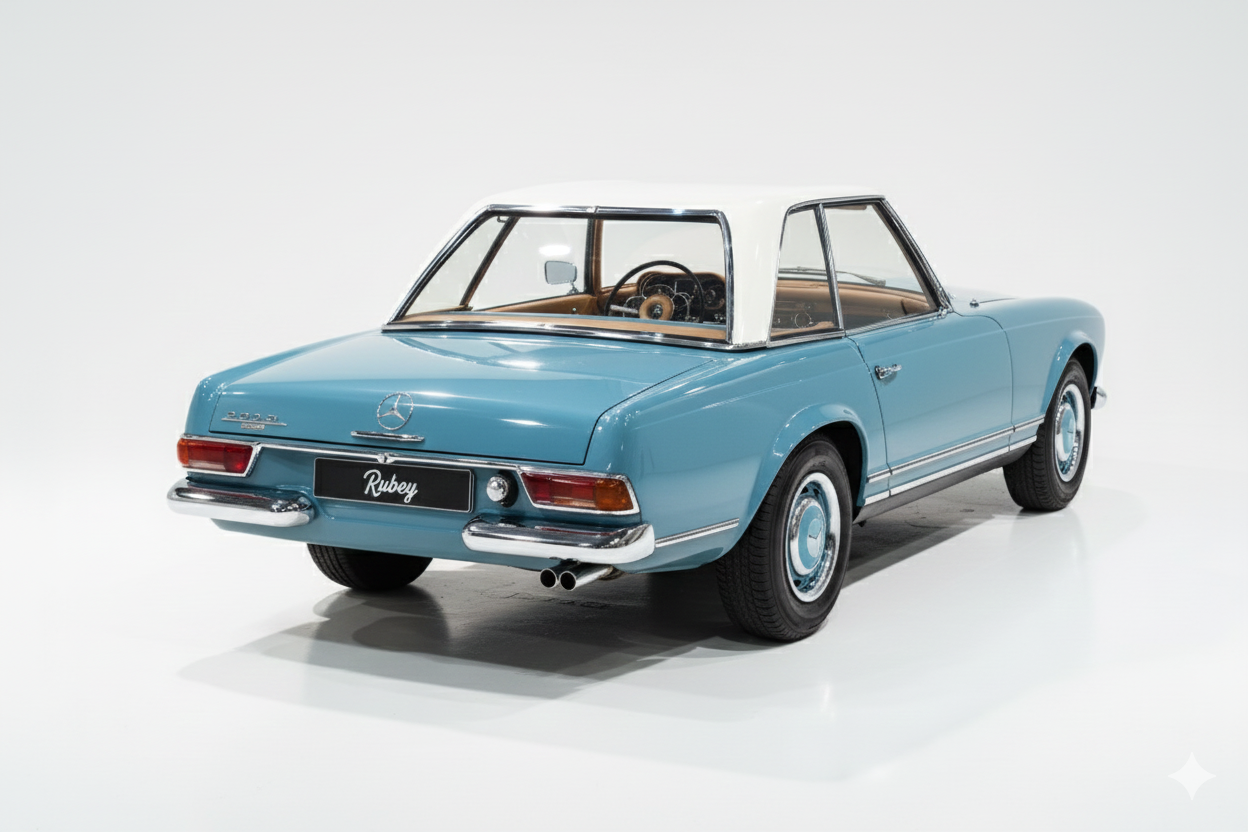
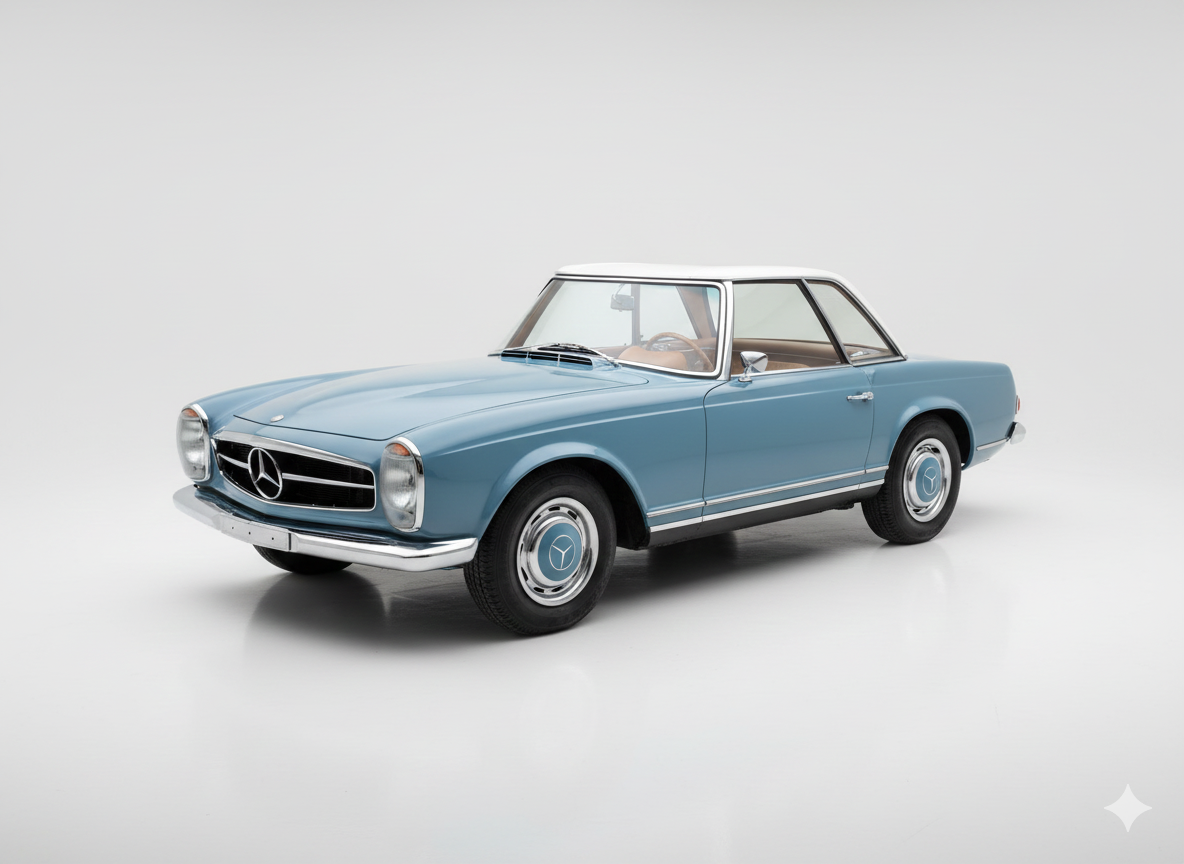
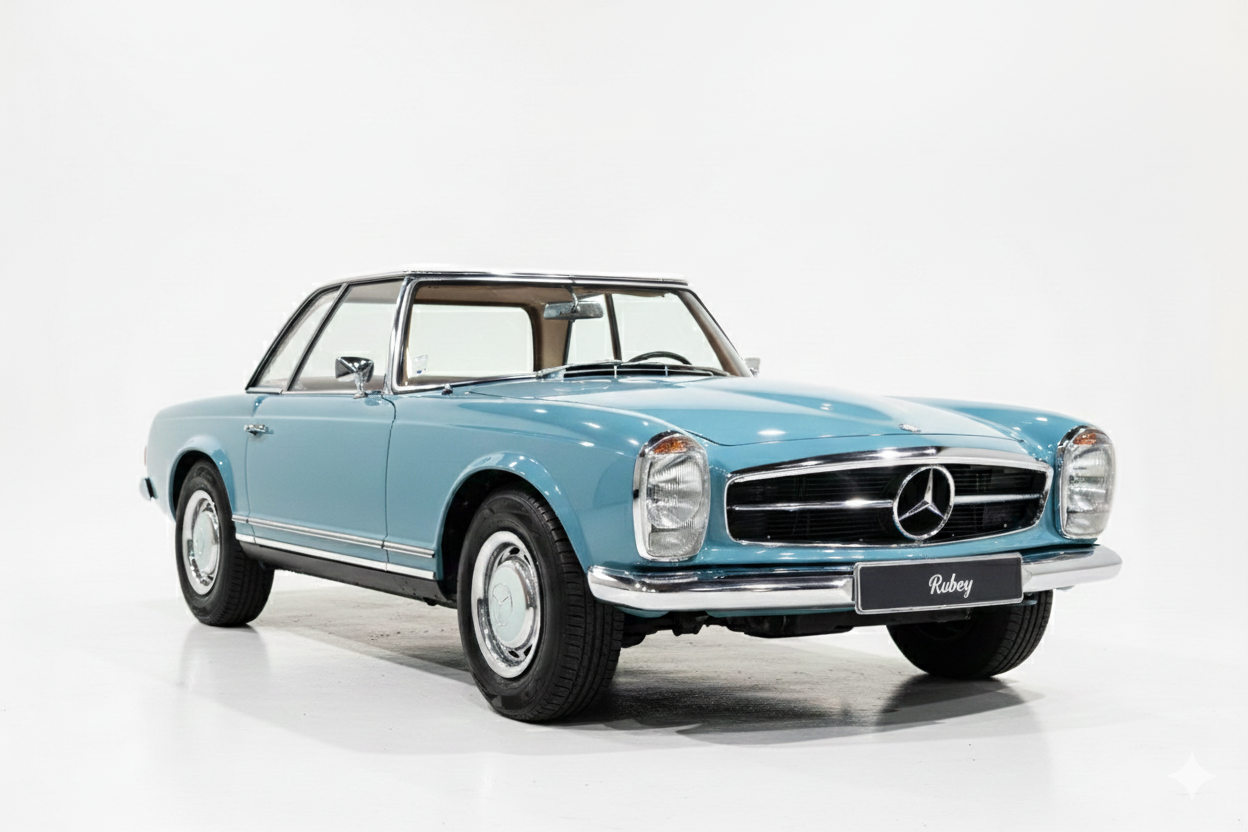
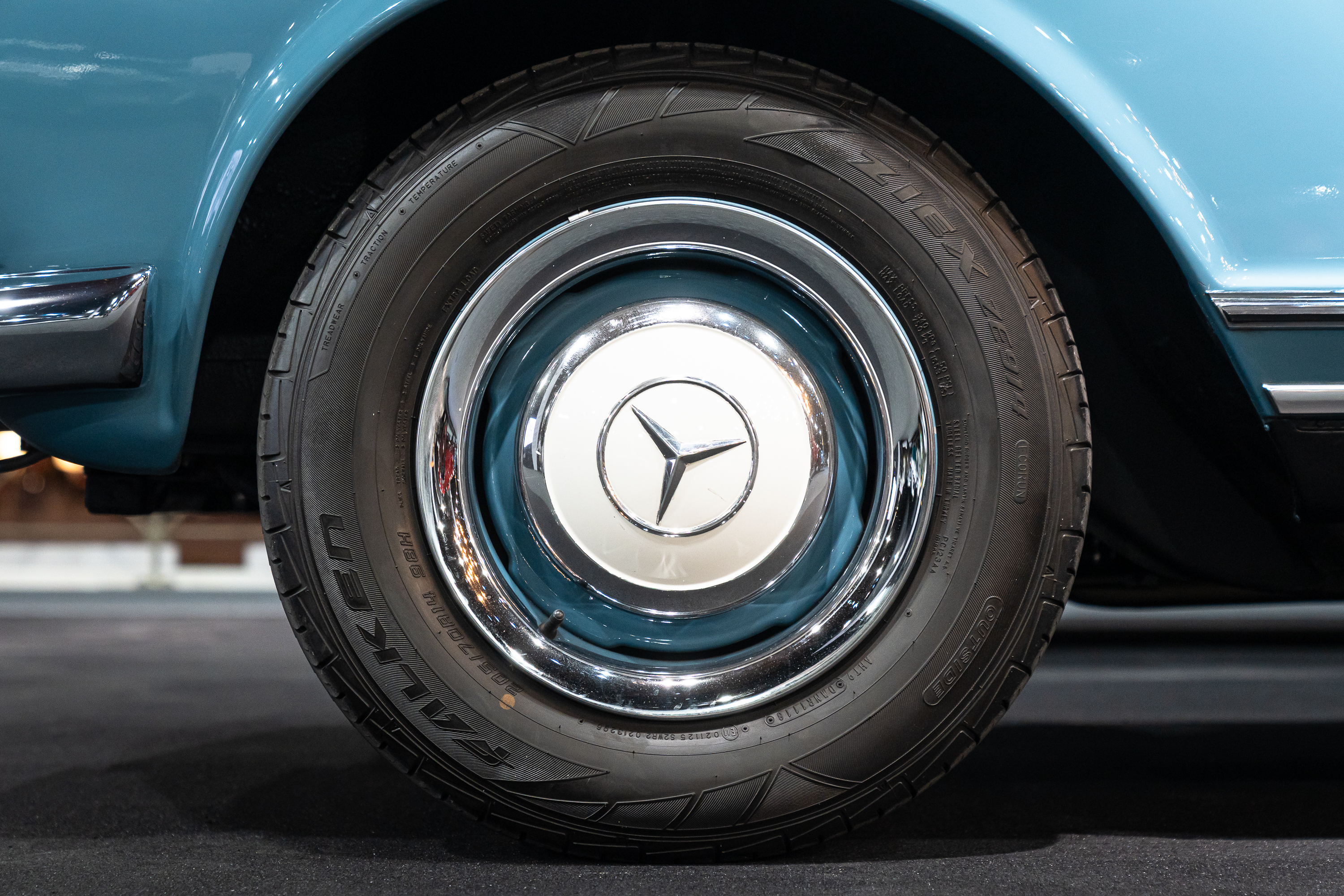
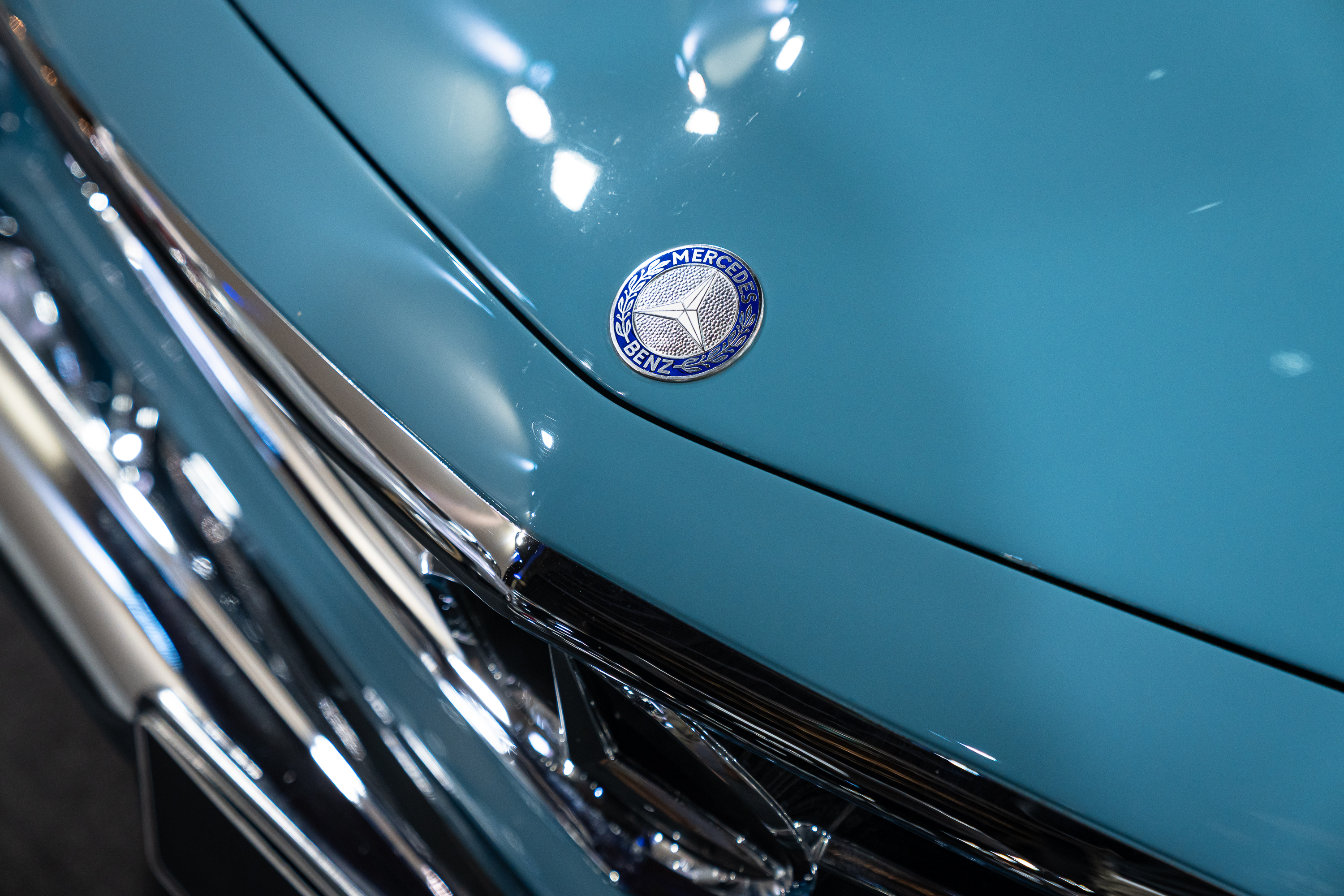
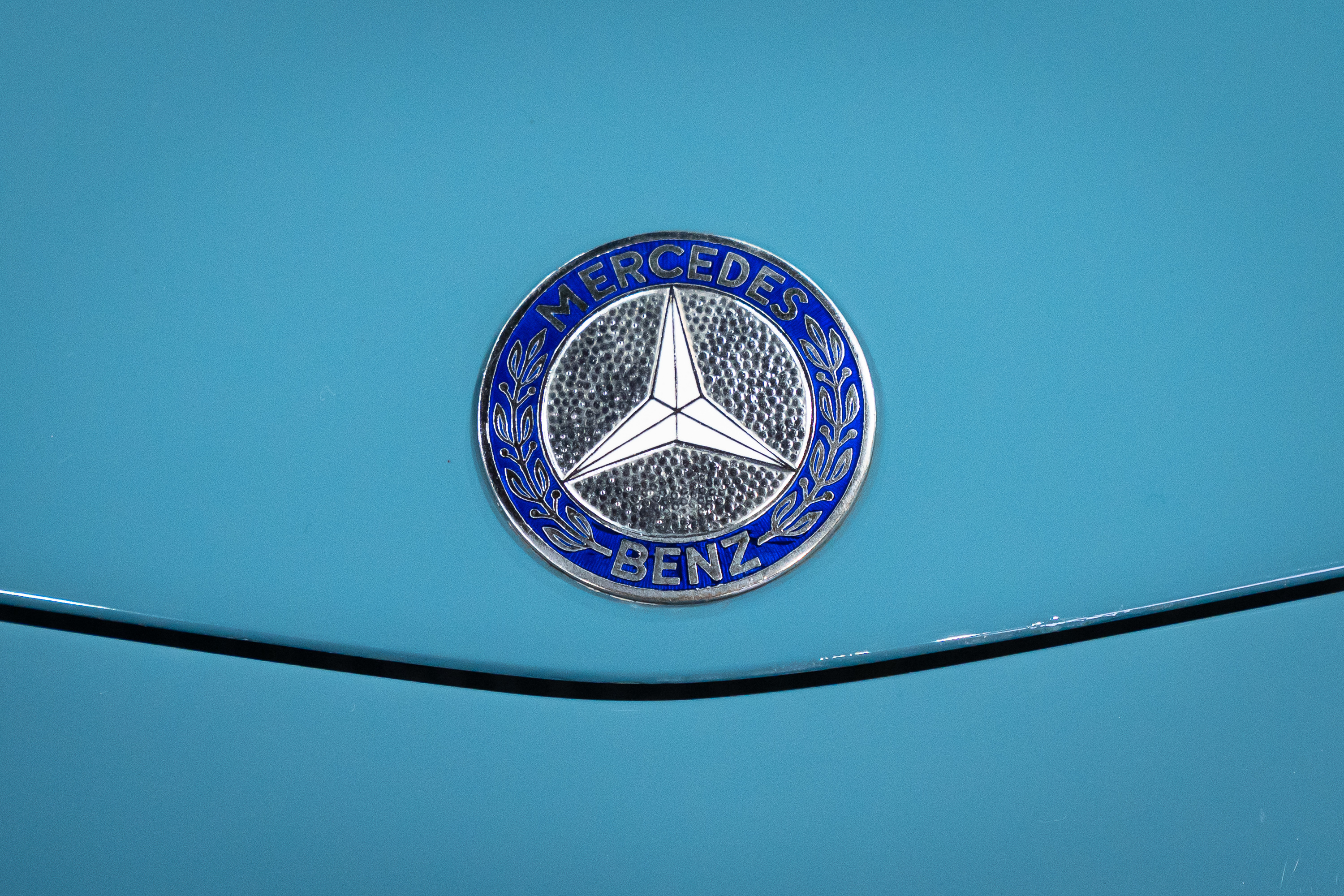
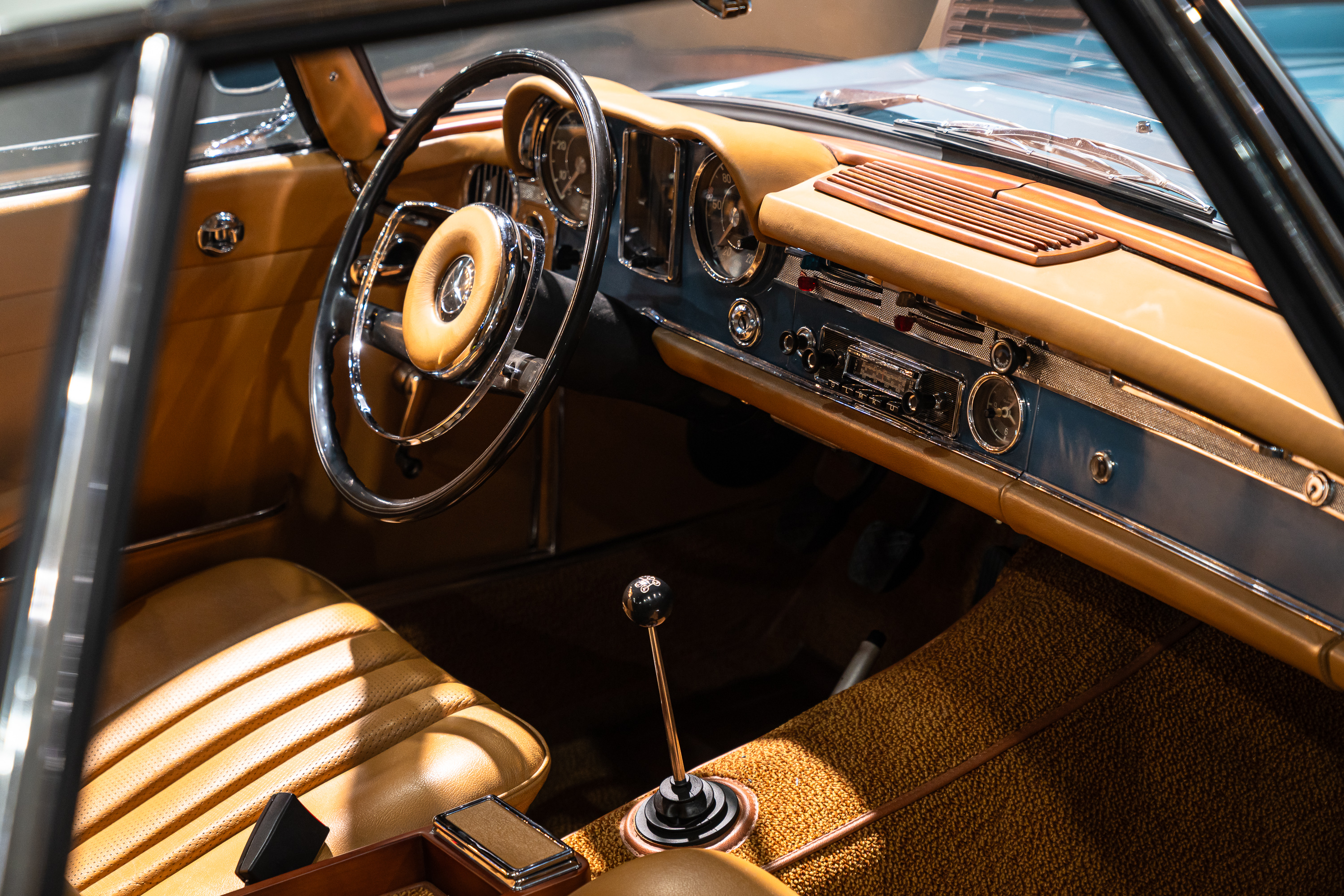
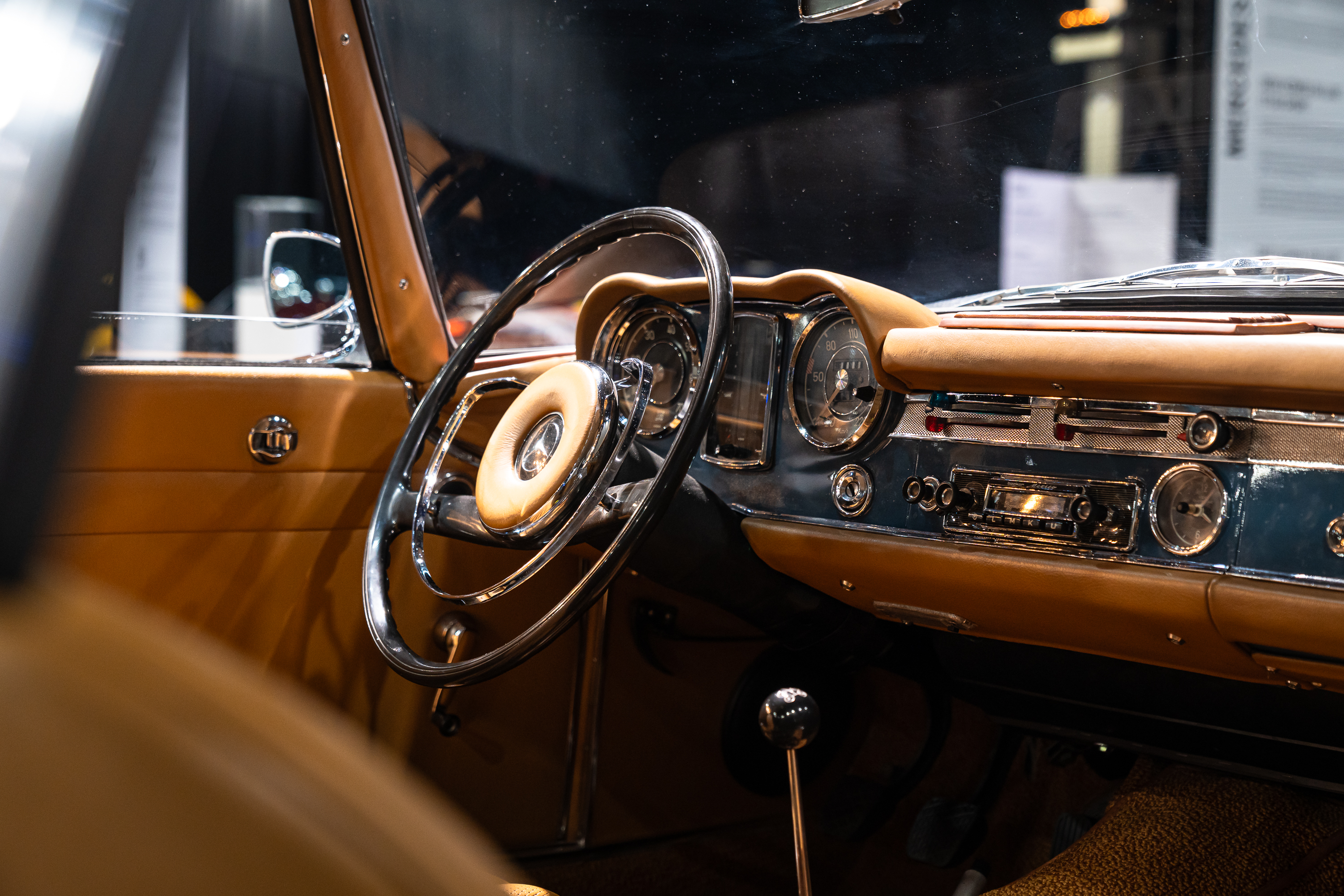
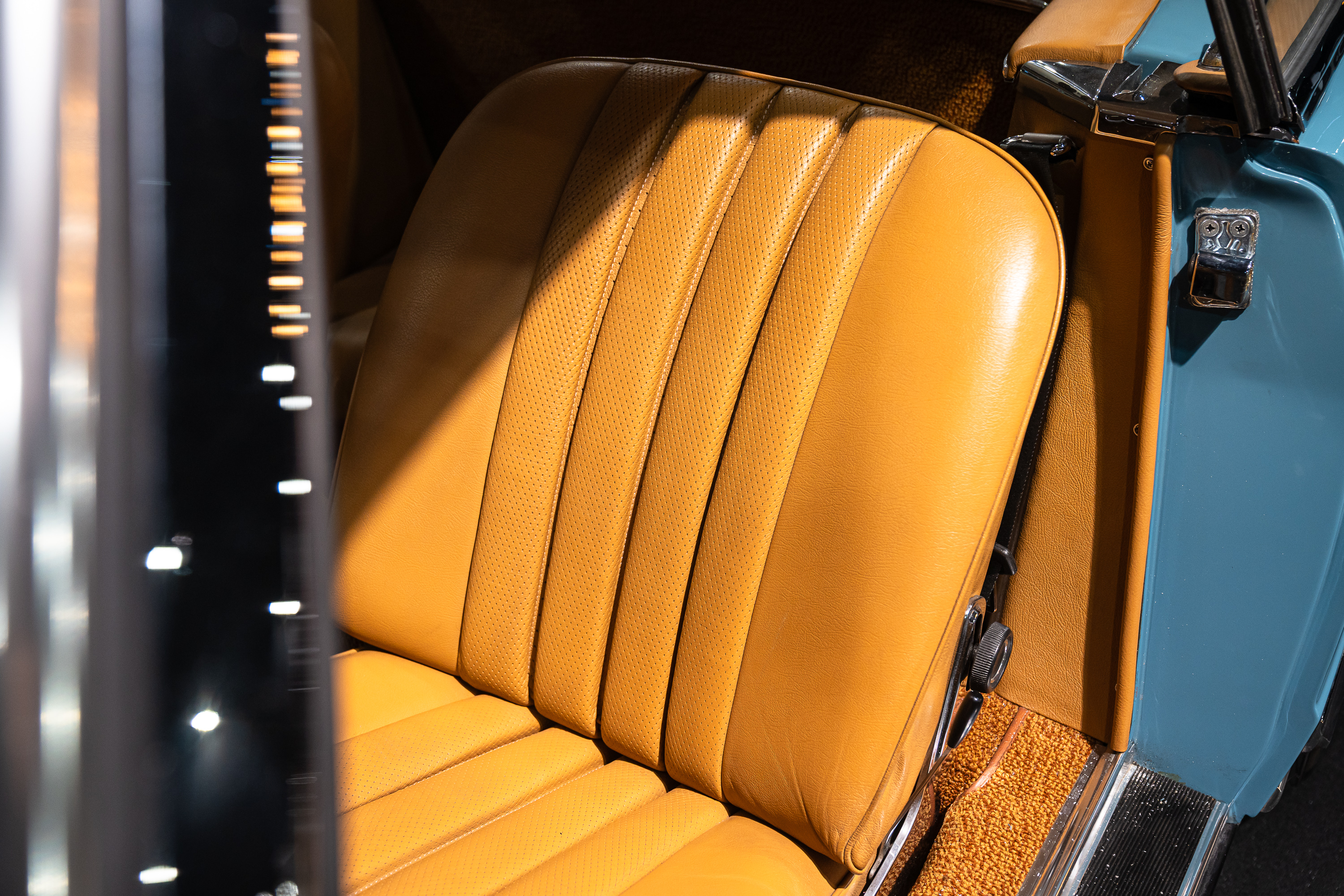

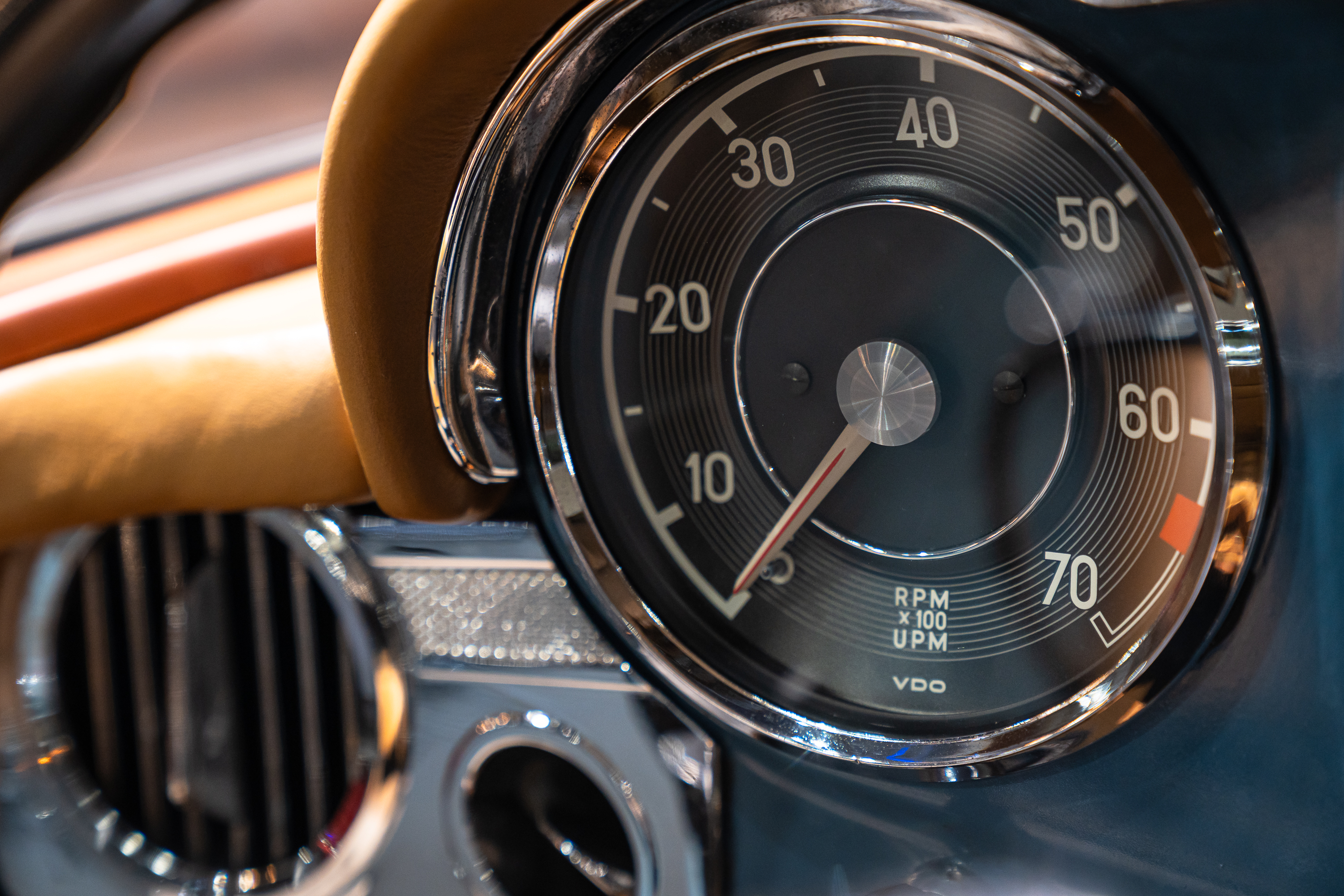
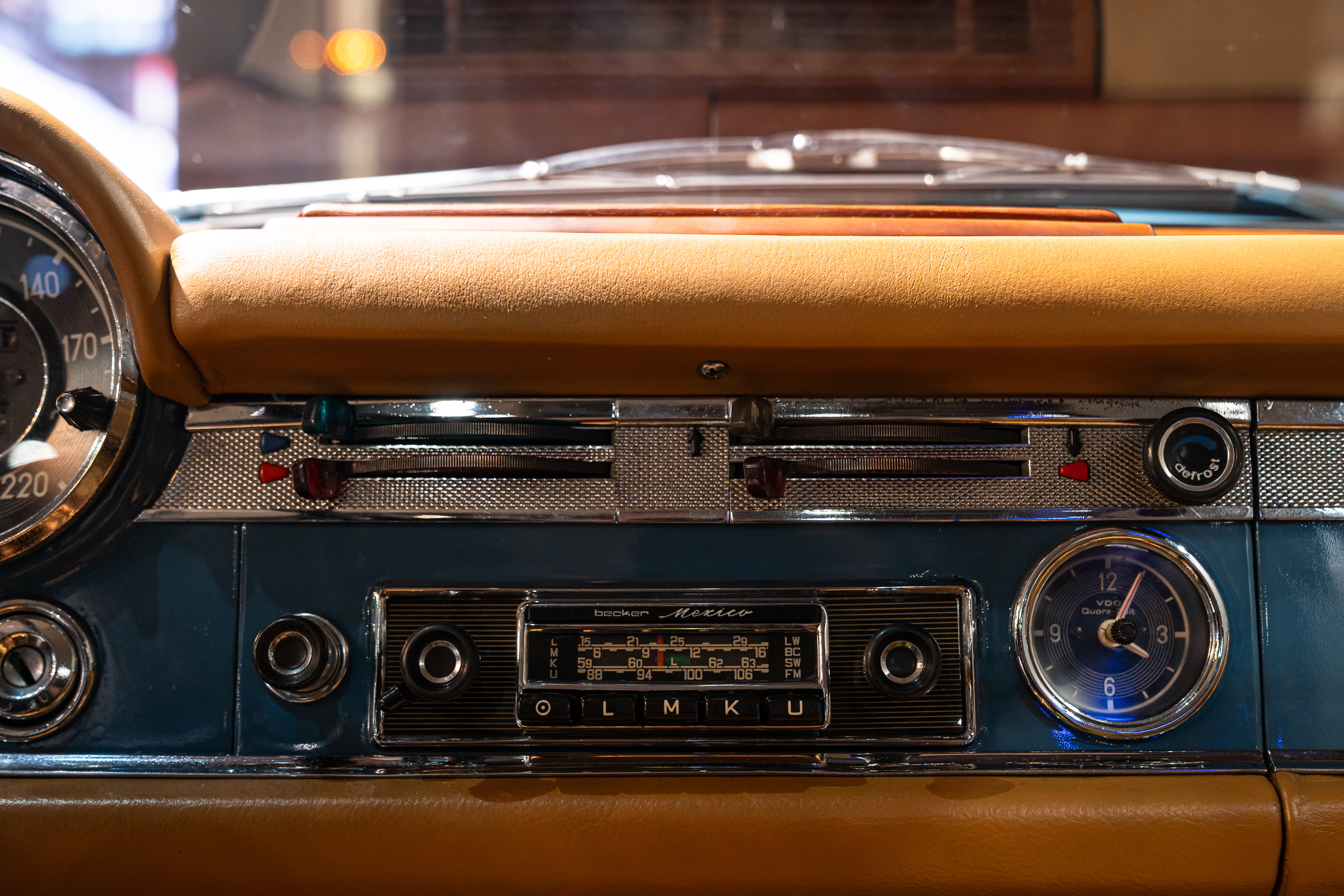
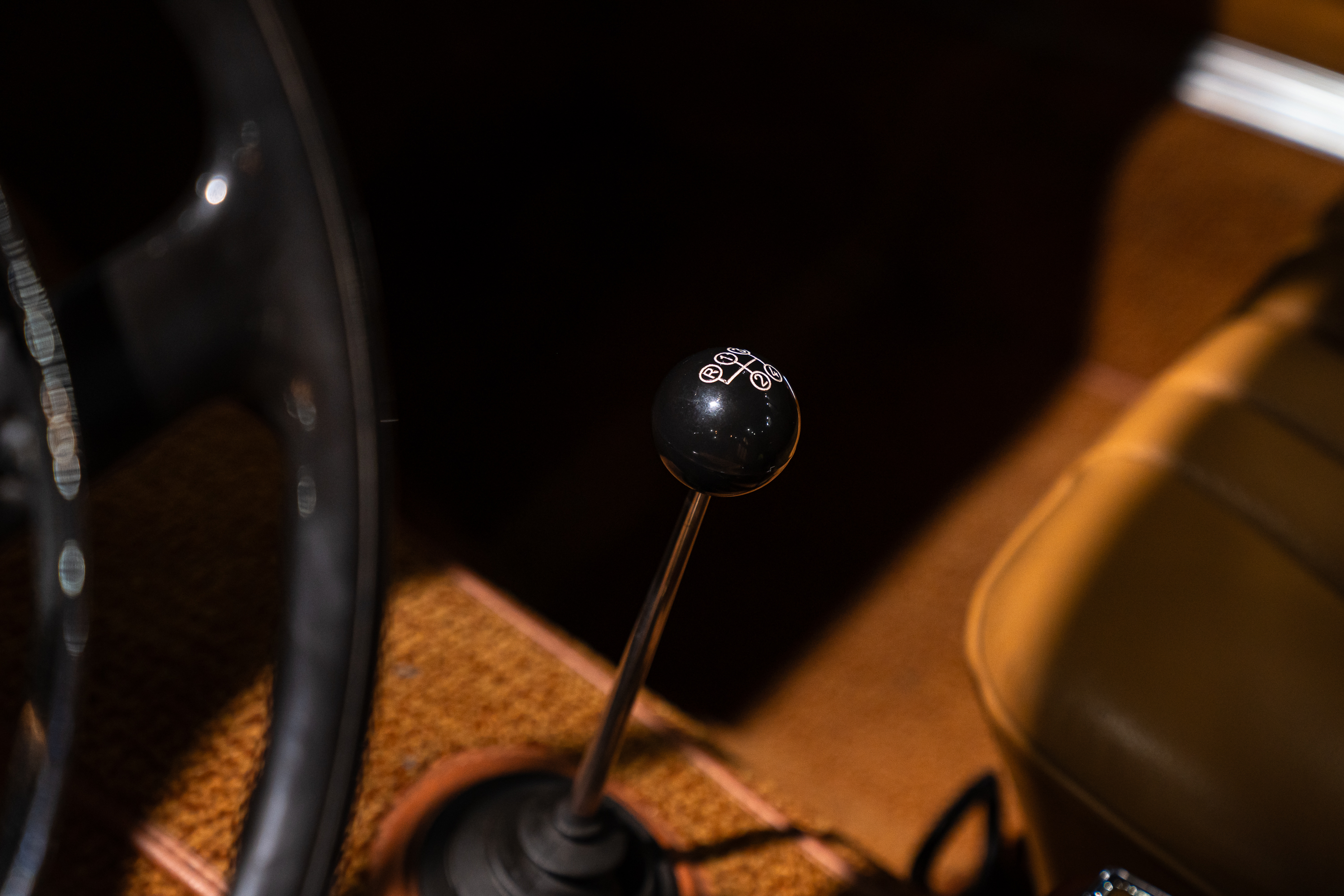
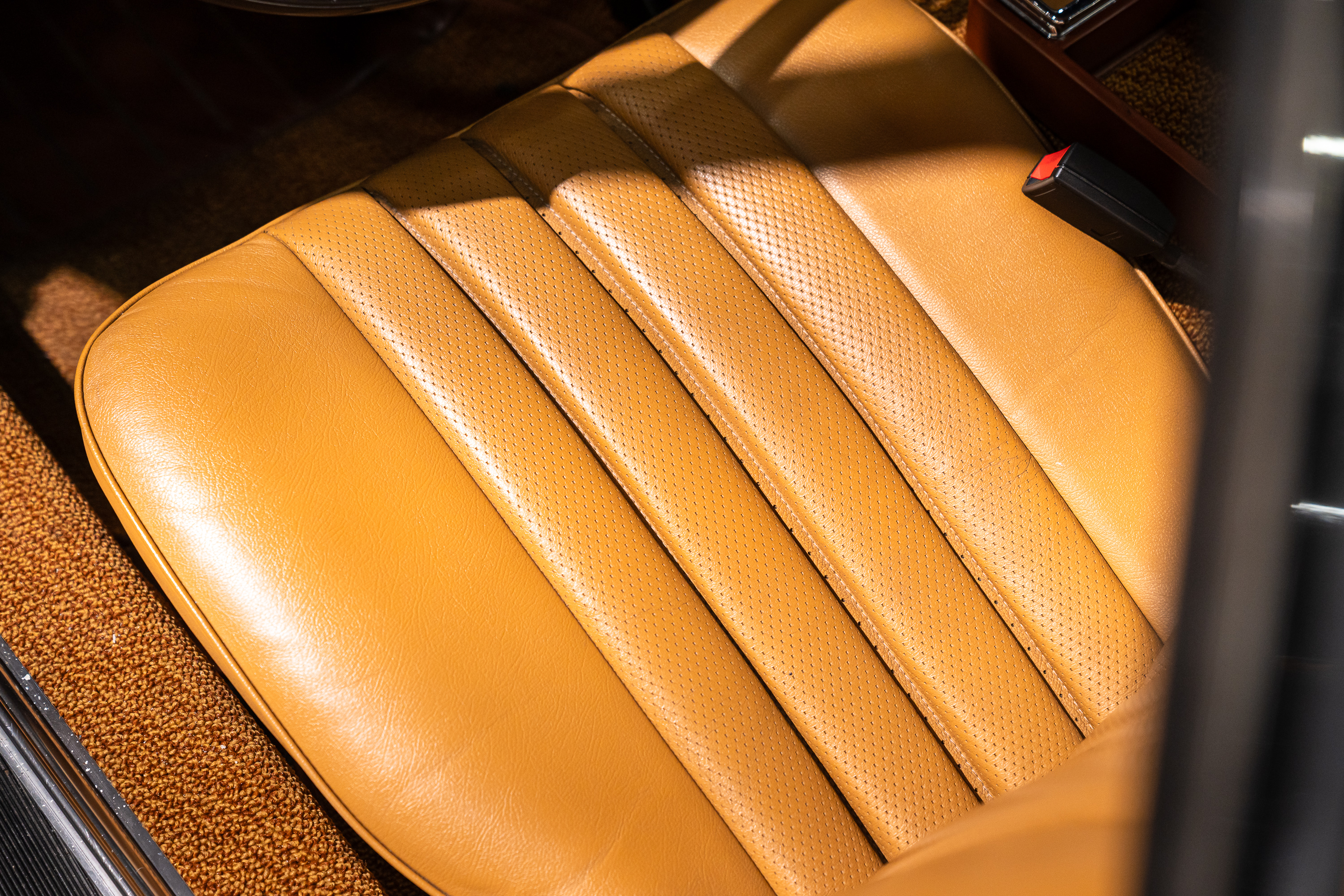
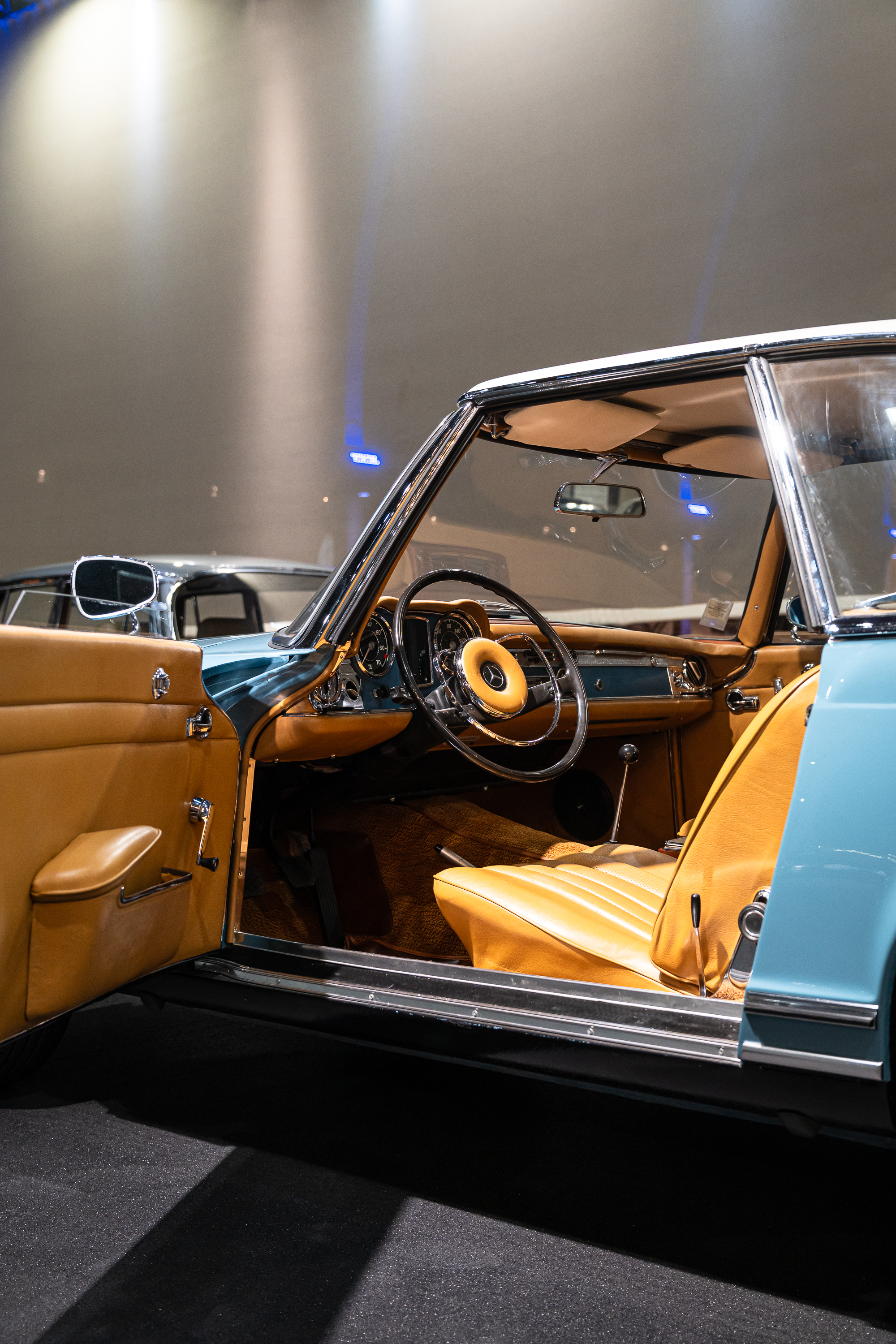
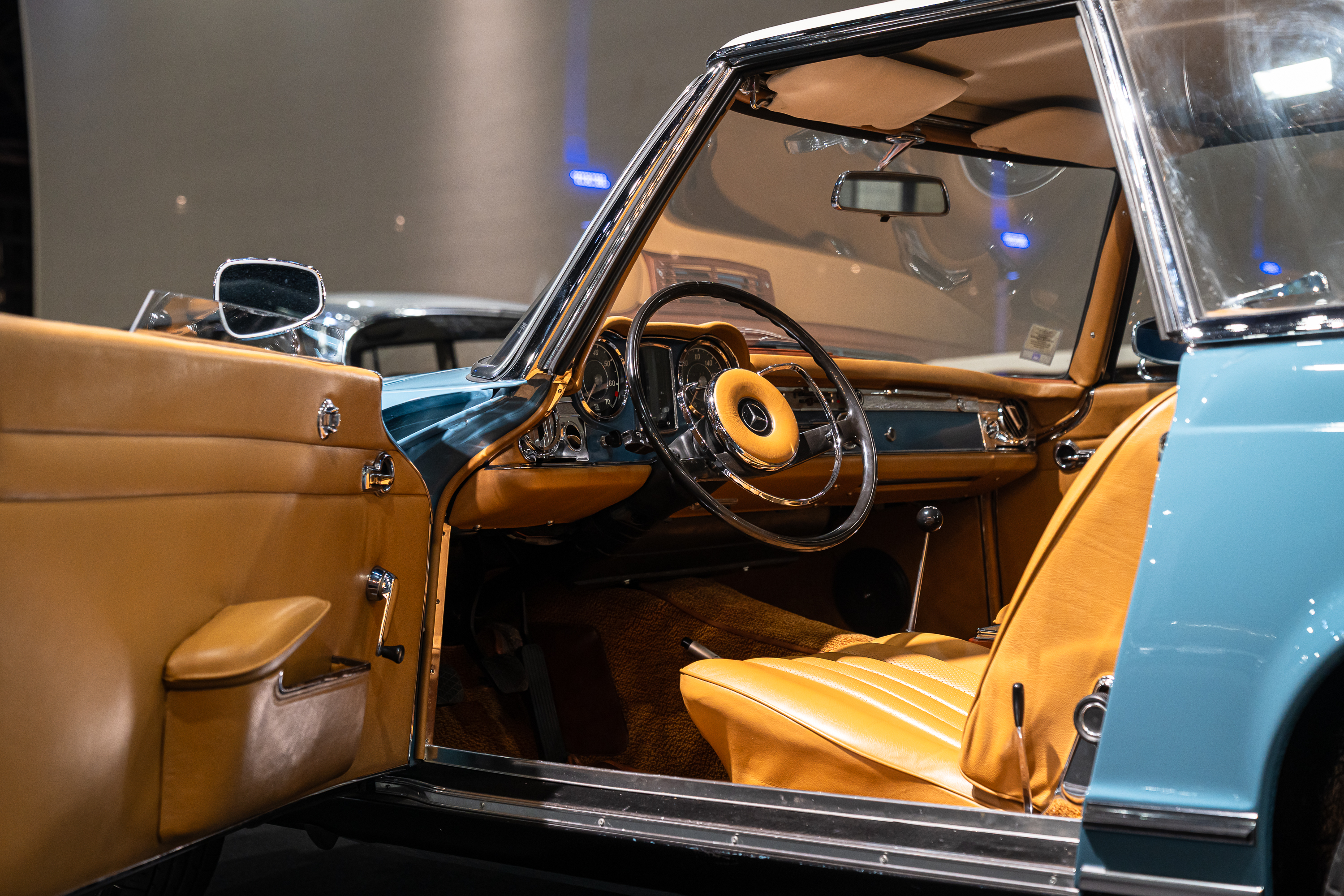
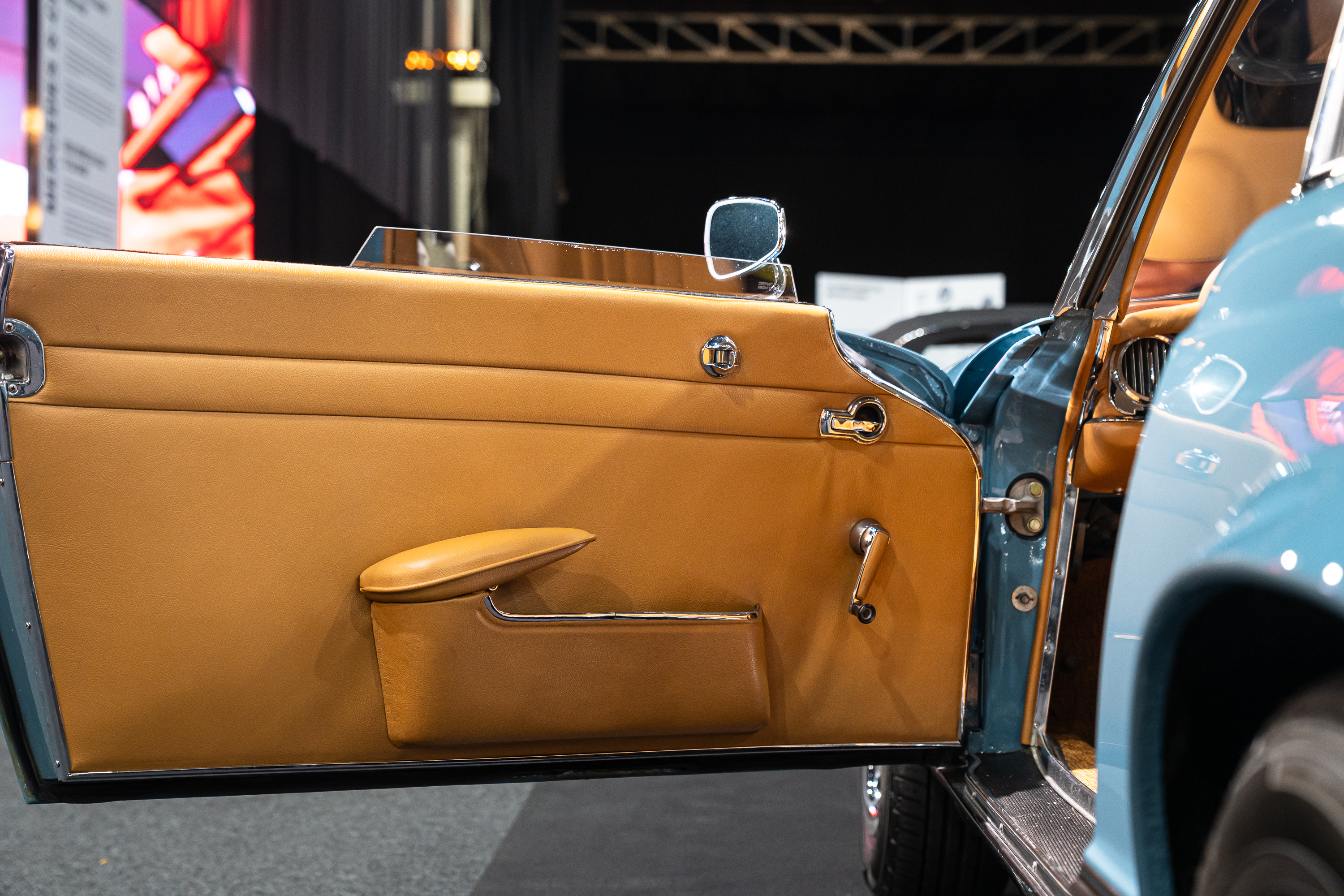
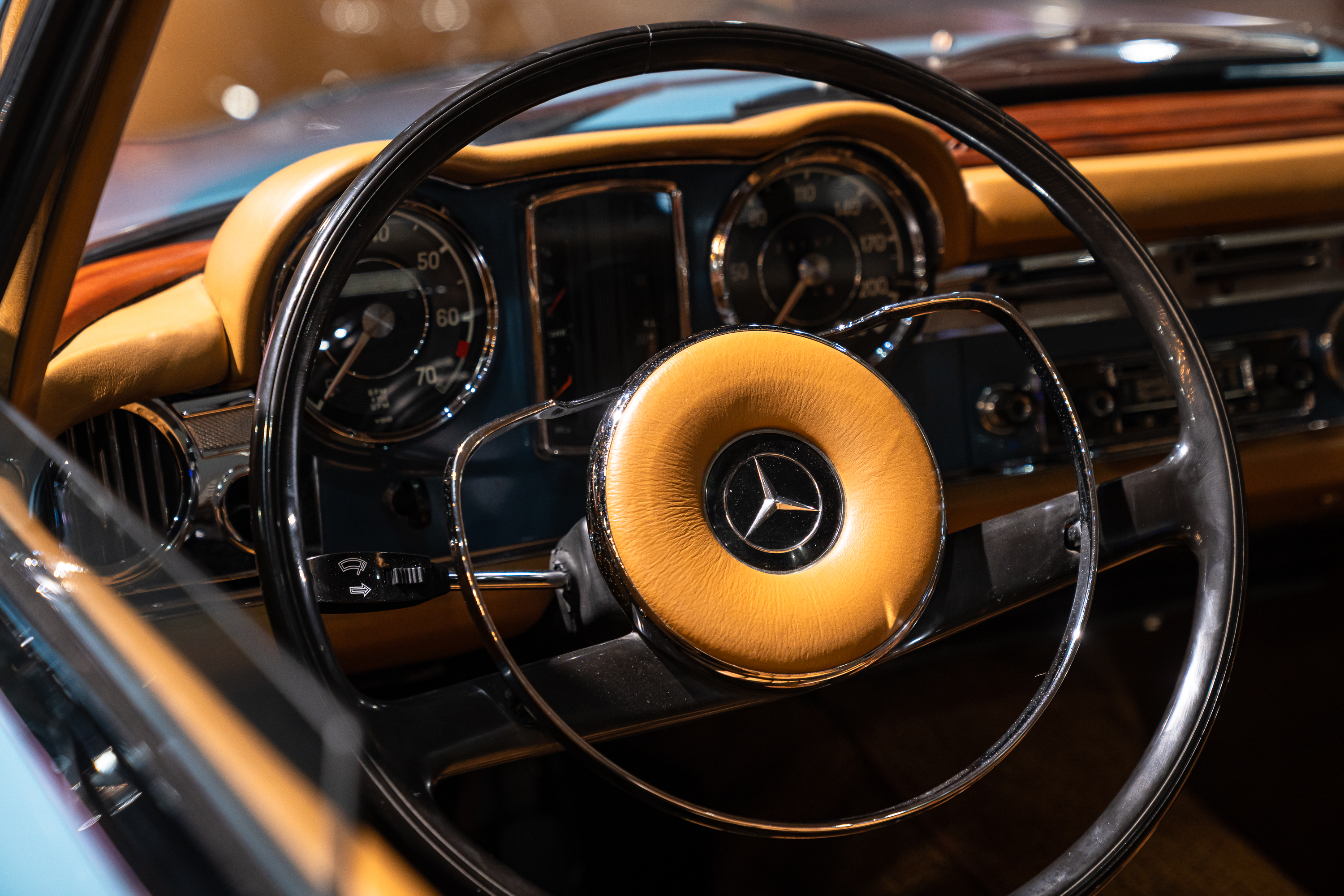
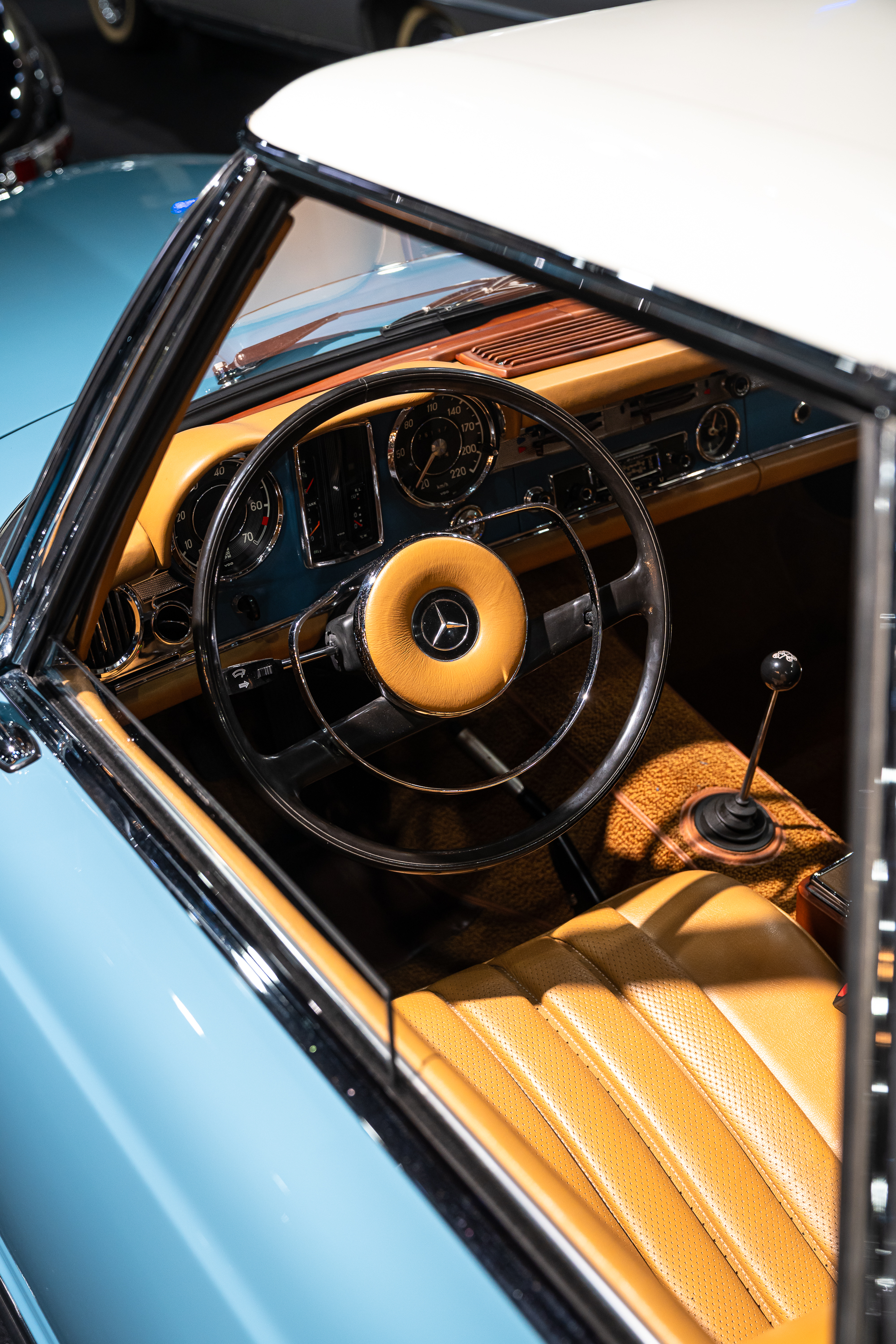
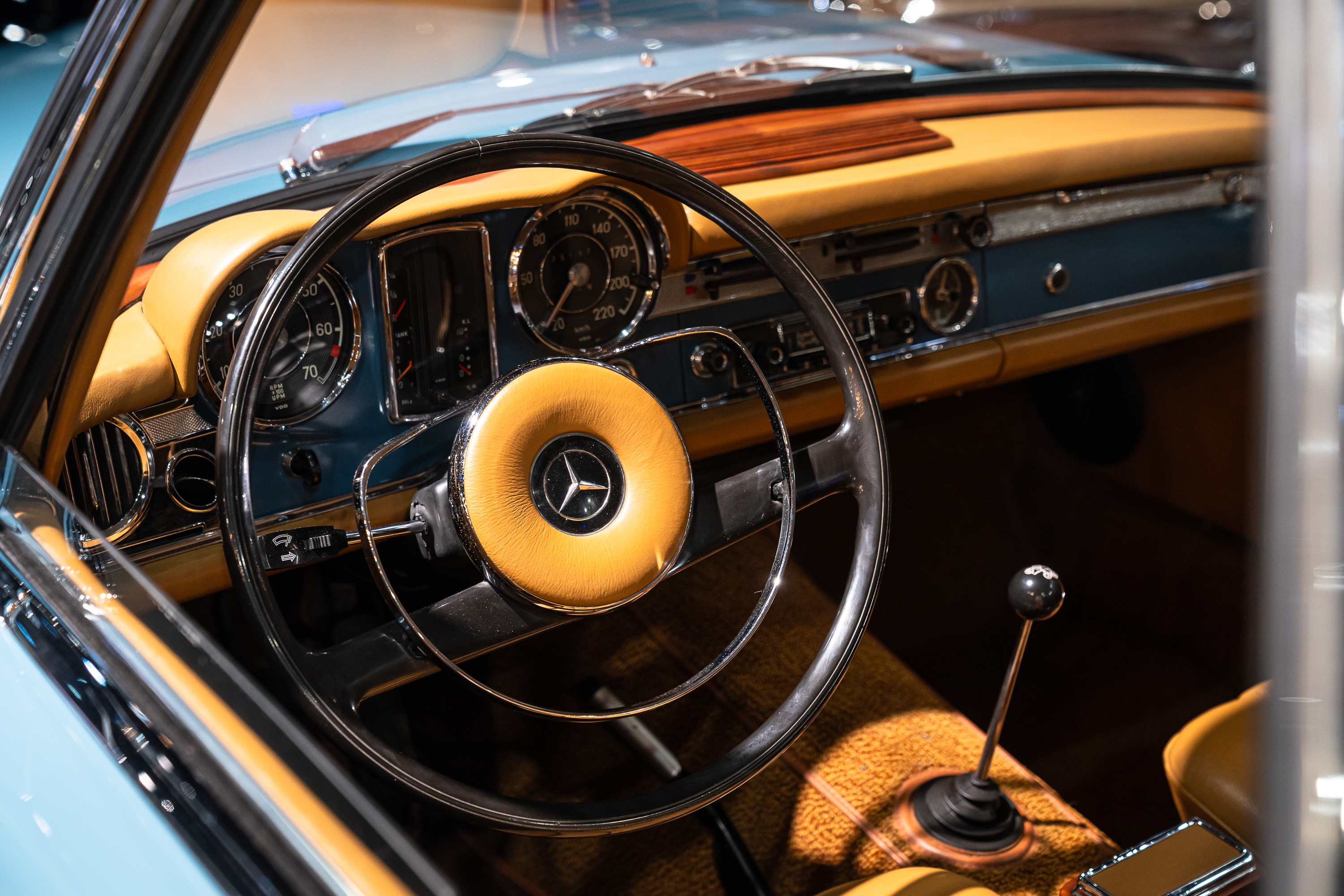
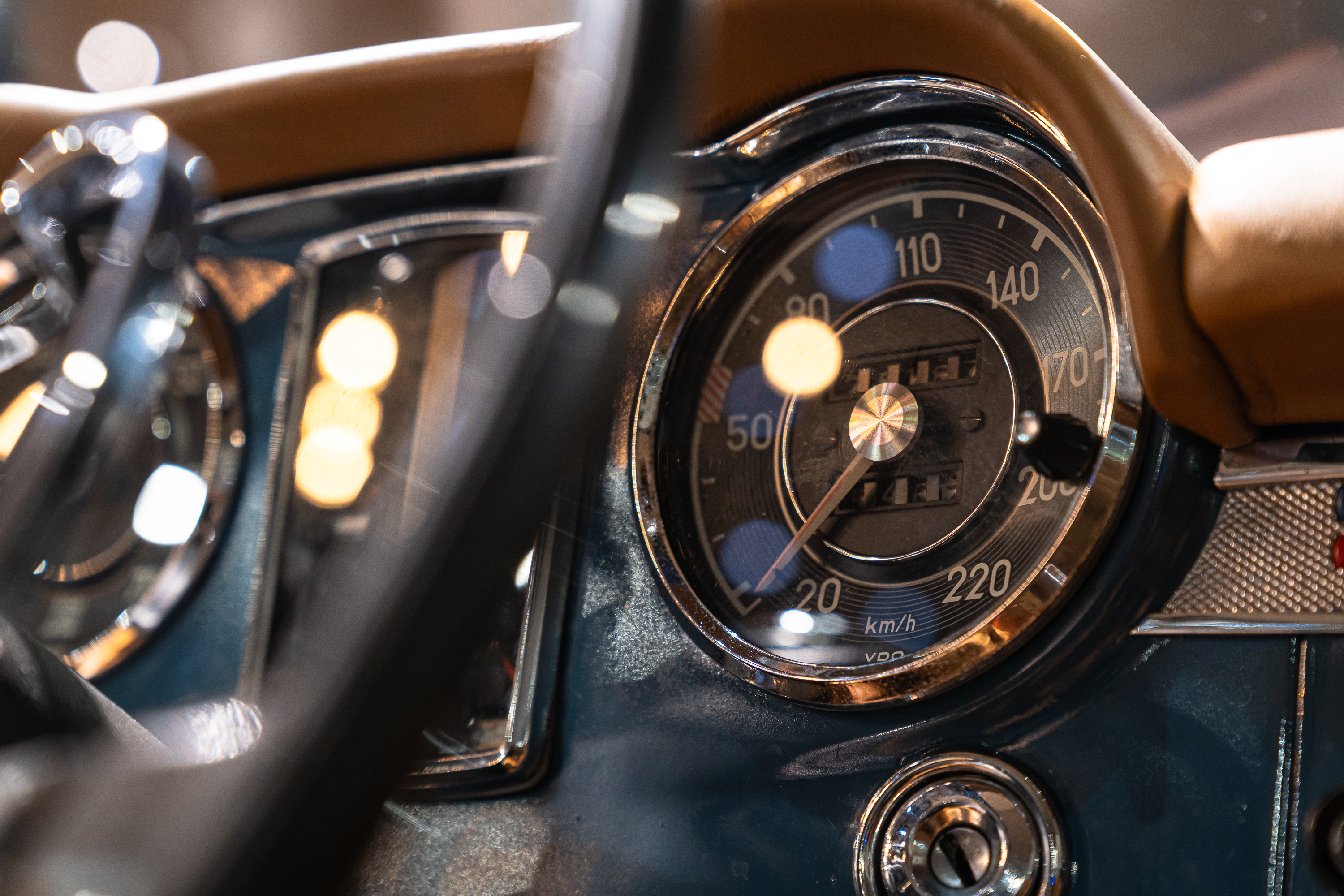
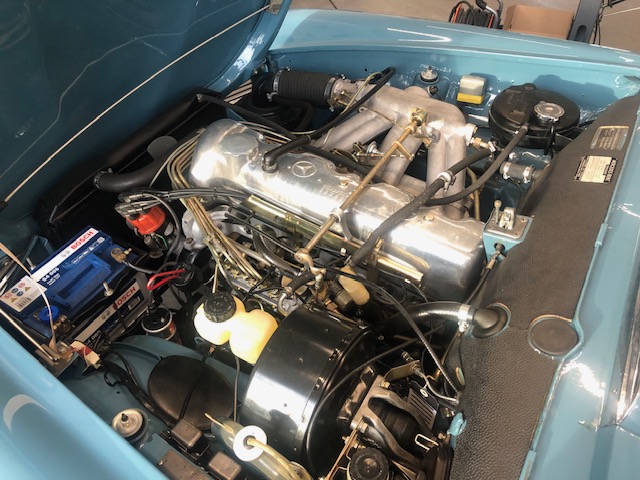
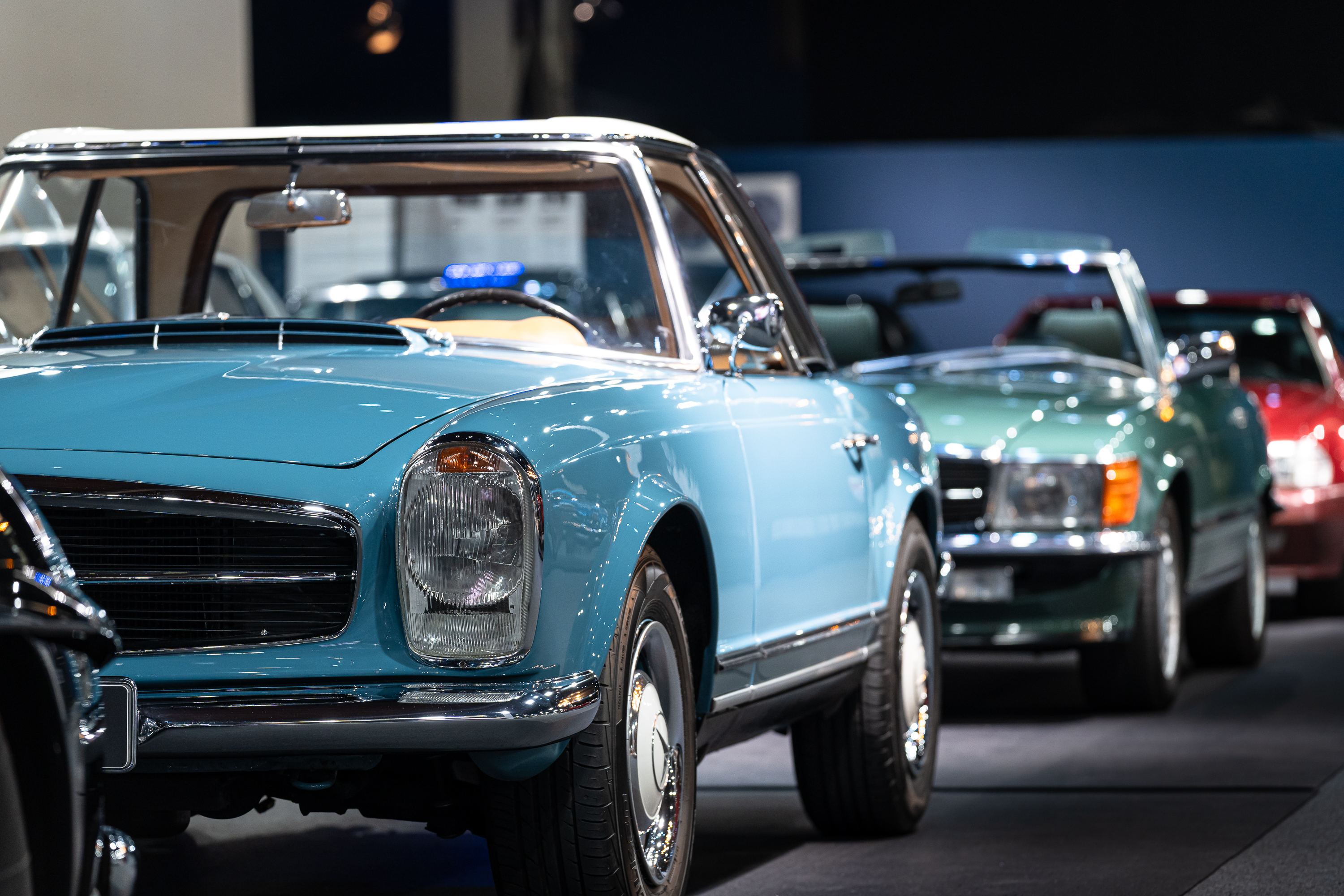
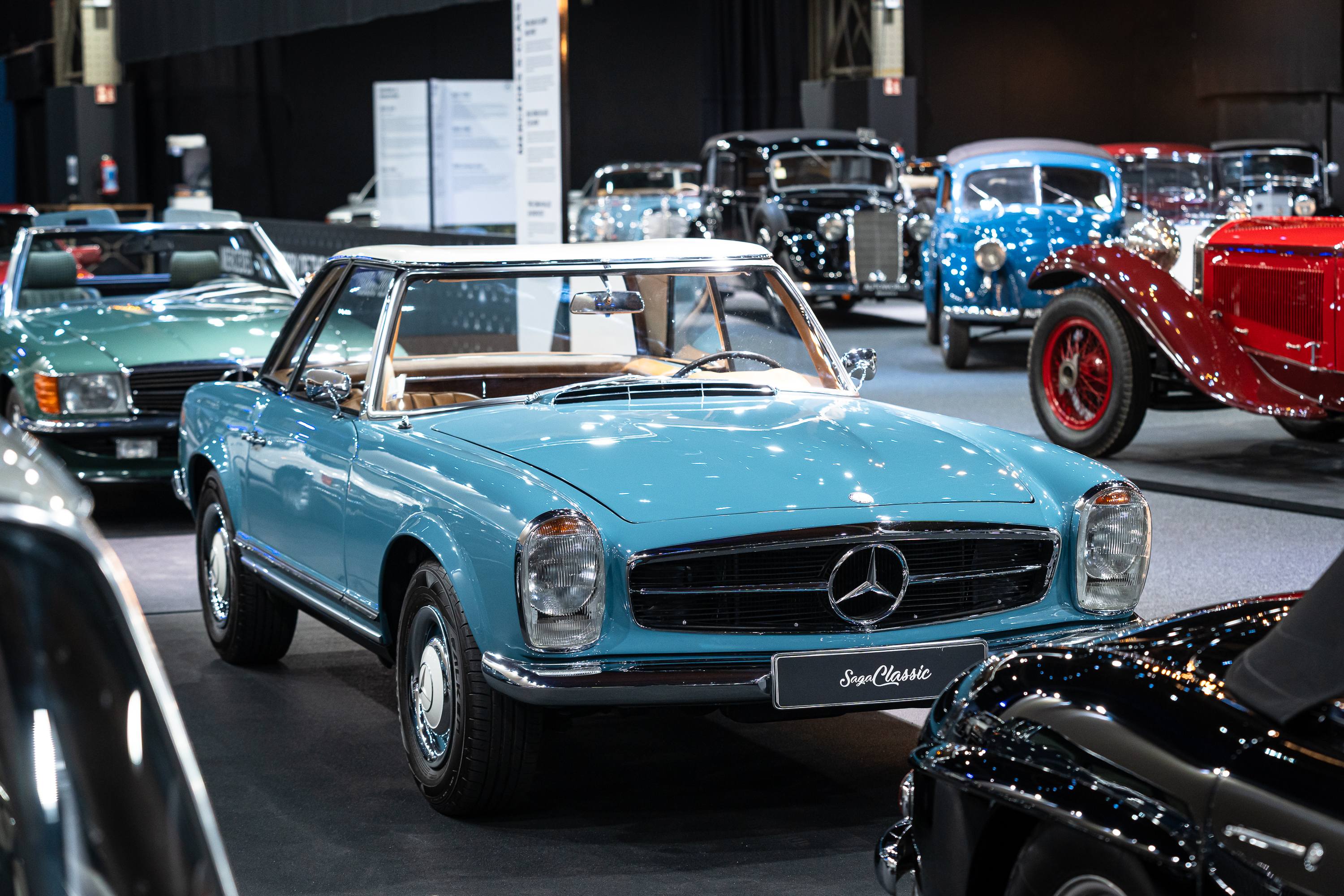
The Mercedes 230 SL Pagode (1965) stands as one of the most iconic cars of the W113 series, a lineage that defined the golden age of Mercedes-Benz design and engineering innovation in the 1960s. The Pagode was developed to combine performance with everyday usability, offering an elegant yet functional sports roadster for a discerning international audience.
Designed by Paul Bracq, the 230 SL Pagode is celebrated for its balanced proportions and distinctive design language. Its most recognisable feature is the concave hardtop roof, which gave rise to the nickname “Pagode”. This design element was not purely aesthetic, as it also contributed to structural rigidity and improved visibility. The model represented a decisive step forward in automotive design by successfully integrating safety, comfort, and performance into a single coherent concept.
The 230 SL Pagode was positioned as the successor to the 190 SL and formed the foundation of the W113 series, which later included the 250 SL and 280 SL. It was equipped with a 2.3 litre inline six-cylinder engine (M127 II) with mechanical fuel injection, delivering 150 horsepower. Combined with refined suspension and braking systems, the car offered a driving experience that was both engaging and suitable for long-distance touring. Between 1963 and 1967, approximately 48.000 units of the 230 SL were produced, contributing to its enduring collectability.
This specific 230 SL Pagode, manufactured in 1965, is a matching-numbers example, confirming the originality of its core mechanical components. The vehicle underwent a full restoration in 2020 by Paris Pagode, a specialist atelier focused exclusively on Mercedes-Benz W113 models. The restoration was carried out with close attention to original specifications, materials, and finishes, preserving the historical integrity of the car.
The vehicle is placed on long-term loan to Autoworld Brussels, where it forms part of a curated presentation of significant automobiles. Autoworld Brussels is recognised internationally for its role in preserving and presenting automotive heritage. Display within a museum context situates the Pagode not merely as a collectible object, but as a design and engineering artifact that reflects the social and technological ambitions of its era.
The Mercedes 230 SL Pagode represents a defining moment in post-war automotive history. It embodies the transition from purely sporting roadsters to refined grand touring cars that could be used daily without sacrificing elegance or performance. Its design language and engineering principles influenced subsequent generations of Mercedes-Benz vehicles and continue to resonate with collectors and designers today.
The long-term public exhibition at Autoworld Brussels further reinforces the cultural relevance of this particular vehicle. Museum display ensures professional conservation, scholarly documentation, and public accessibility, while contributing to the provenance of the car. In this context, the Pagode stands not only as a desirable collectible, but as a lasting reference point in the history of automotive design.
The Mercedes 230 SL Pagode occupies a well established position within the international market for collectible classic cars. As the first model of the W113 series, it represents the original expression of a design and engineering concept that would later become one of the most recognisable lineages in Mercedes-Benz history.
The W113 series is widely regarded as a stable and mature segment of the classic car market. Demand for the 230 SL is supported by a broad international collector base, particularly in Europe and North America, and by continued institutional and museum interest in post war automotive design. The model is sought after for its balance between usability, technical sophistication, and iconic design.
Public auction records and specialist dealer transactions over multiple decades show that Mercedes 230 SL Pagodes trade within relatively well defined price ranges, with significant differentiation based on condition, originality, restoration quality, and documentation.
Driver grade or partially restored examples typically trade at the lower end of the market, while well restored, matching-numbers vehicles with documented history command materially higher prices. Top quality examples offered through specialised dealers or international auction houses have historically achieved strong results relative to the broader classic car market.
Although prices may fluctuate in response to macroeconomic conditions and collector sentiment, long term data indicate that high quality 230 SL Pagodes have demonstrated resilience and gradual appreciation over extended holding periods.
Production of the Mercedes 230 SL “Pagoda” was limited to approximately 19,800 units built between 1963 and early 1967. While total production is well documented, it is estimated that only a fraction of these cars survive today in high‑quality, original or correctly restored condition.
Over time, attrition, poor restorations, and loss of originality have reduced the effective supply of collectible examples. As a result, demand increasingly concentrates on vehicles with strong provenance, matching numbers, and professional restoration. This dynamic contributes to price differentiation and supports the long term positioning of high quality examples within the market.
A core element of the Rubey investment thesis is that public exhibition in a recognised museum context contributes to provenance enrichment and long term value formation.
Academic research in cultural economics demonstrates that institutional recognition and documented exhibition history reduce information asymmetry and increase buyer confidence, which in turn translates into higher sale probabilities and price premia. While most empirical studies focus on fine art, the underlying mechanism applies equally to museum grade collectible objects.
The long term loan of this Mercedes 230 SL Pagode to Autoworld Brussels places the vehicle within a recognised institutional framework. Museum custody provides professional conservation, public visibility, and third party validation. Over time, this contributes to documented provenance and cultural legitimacy, factors that are increasingly valued by collectors and professional buyers at the point of sale.
The investment is structured around a long term holding strategy, with a planned duration of ten years and a potential exit window from year eight onwards. This approach allows the vehicle to benefit from both market driven appreciation and cumulative provenance effects resulting from public exhibition.
The absence of leverage and recurring management fees ensures that potential appreciation is not diluted by ongoing cost leakage. As a result, the net outcome at exit depends primarily on the realised sale price and timing, rather than on financial structuring effects.
Based on observed market behaviour for comparable vehicles, historical price ranges, and the structural characteristics of the investment, the following indicative scenarios are used to frame return expectations. These scenarios are illustrative and not guaranteed.
In a conservative scenario, assuming limited nominal appreciation over the holding period, the projected net internal rate of return would be approximately 2% to 3% per year.
In a base case scenario, reflecting long term appreciation consistent with historical trends for high quality, well documented Mercedes 230 SL Pagodes, the projected net internal rate of return would be approximately 6% to 7% per year.
In an upside scenario, assuming favourable market conditions, sustained collector demand, and full pricing of museum provenance at exit, the projected net internal rate of return would be approximately 9% to 11% per year.
On the basis of these scenarios, the project targets a net internal rate of return in the range of approximately 8% to 12% per year.
This target is not guaranteed and may materialise below or above the indicated range. It is provided as a transparent reference point derived from historical market data, structural cost efficiency, and the expected impact of long term institutional exposure.
Investment in a single collectible car involves inherent risks, including exposure to market cycles, limited liquidity, changes in collector preferences, and uncertainty regarding the timing and price of exit. A partial or total loss of invested capital remains possible.
The provenance and exhibition effects described above are supported by the following academic and market research sources:
Fraiberger, S., Sinatra, R., Resch, M., Riedl, C., & Barabási, A.-L.
Quantifying reputation and success in art.
Science, Vol. 362, No. 6416 (2018).
Demonstrates statistically significant price and sale-probability effects linked to exhibition history and institutional recognition.
Agnello, R. J., & Pierce, R. K.
Financial returns, price determinants, and genre effects in American art investment.
Journal of Cultural Economics (1996).
Identifies museum recognition and provenance as significant price determinants in art markets.
Goetzmann, W. N.
Accounting for taste: Art and the financial markets over three centuries.
American Economic Review (1993).
Explores long-term price formation and the role of institutional validation in art markets.
Pownall, R. A. J., & Wieand, K.
Price determinants in the art auction market.
Journal of Cultural Economics (2019).
Shows that exhibition history and provenance variables materially affect auction outcomes.
Ashenfelter, O., & Graddy, K.
Art auctions.
Handbook of the Economics of Art and Culture (Elsevier).
Provides foundational analysis of signalling, trust, and price formation in art and collectible markets.
Classic.com, Hagerty Valuation Tools, and public auction records
Used for observed transaction ranges, historical price bands, and comparative market context for the Mercedes 230 SL Pagode.
The investment in the Mercedes 230 SL Pagode (1965) is governed first and foremost by the Information Note prepared in accordance with Belgian law and communicated to the FSMA, together with the Partnership Agreement and statutes of the simple partnership. These documents constitute the only legally binding framework defining the rights, obligations, risks, and economic interests of investors.
Both the Information Note and the Partnership Agreement are made available in full in this section of the marketplace and can be consulted prior to any investment decision.
This Trust Framework section provides a high level, non binding explanation of how the contractual arrangements are implemented in practice. It does not replace, amend, or override the legal documentation.
The investment is structured through a Belgian simple partnership, governed by Belgian law.
Rubey BV acts as the statutory manager of the partnership and is responsible for executing the project strictly within the parameters defined in the Information Note and the Partnership Agreement.
The responsibilities of the manager include:
administration of the partnership and investor register
management of the subscription process and investor onboarding
compliance with legal and regulatory requirements
coordination of custody, insurance, maintenance, exhibition, and exit
investor communication and reporting
The partnership does not use leverage, does not borrow funds, and does not engage in activities outside the scope defined in the contractual documentation.
The vehicle is placed on long term loan to Autoworld Brussels under a formal loan agreement consistent with museum standards.
Autoworld Brussels is responsible for:
museal grade custody and security
appropriate conservation and display conditions
coordination of insurance coverage in line with institutional practice
The car is intended to be displayed on a long term basis, with the possibility of temporary exhibition elsewhere or participation in selected concours events, subject to professional oversight and the terms of the loan agreement.
The vehicle was acquired from SAGA, an official Mercedes Benz dealer group with a dedicated classic car division, ensuring professional sourcing and documentation.
The restoration was completed by Paris Pagode, a specialist atelier focused on Mercedes Benz W113 Pagode models. This contributes to the technical integrity, historical correctness, and long term collectability of the vehicle.
Independent expert assessments were obtained prior to acquisition to establish condition and market value, as described in the Information Note.
Key safeguards defined in the Partnership Agreement and Information Note include:
a single asset structure with no substitution or reinvestment
a fixed offering size and predefined subscription period
prohibition of leverage or external financing
pro rata participation of investors in net sale proceeds
clearly defined exit mechanics and liquidation rules
Investors do not acquire usage, possession, or management rights over the vehicle. Their rights are strictly economic and contractual.
Ownership interests in the partnership are digitally represented through security tokens.
These tokens serve as a technical representation of partnership units and do not replace the underlying legal structure.
Safeguards include:
mandatory KYC and AML verification for all investors
restricted transferability in accordance with the Partnership Agreement
a legally decisive off chain partnership register maintained by Rubey
automatic transfer restrictions during the subscription and liquidation phases
In case of discrepancy, the partnership register prevails over any on chain record.
The structure is designed to align the interests of Rubey and investors:
Rubey’s remuneration is fixed upfront through the offering margin
no recurring management fees are charged to investors
no success fees apply at exit
economic outcomes depend solely on the realised sale value of the asset
In accordance with the Information Note and the Partnership Agreement, investors receive:
periodic updates on the vehicle and its exhibition status
access to valuation information when available
advance communication in the event of a contemplated sale
full transparency on costs and proceeds upon liquidation
This investment relates to a single collectible car, a Mercedes 230 SL Pagode (1965), and is structured as a Single Asset Project through a Belgian simple partnership.
Investors participate by subscribing to partnership units that represent an economic co ownership interest in the underlying asset, in accordance with the contractual documentation.
Legal vehicle
Belgian simple partnership
Underlying asset
One single collectible car
Mercedes 230 SL Pagode, year 1965
Manager
Rubey BV, acting as statutory manager
Governing law
Belgian law
The rights and obligations of investors are defined exclusively in the FSMA Information Note and the Partnership Agreement.
Total offering size (hard cap)
€168.750
Soft cap
75% of the total offering
If the soft cap is not reached by the end of the subscription period, the offering is cancelled and all contributions are refunded, minus payment service provider costs
Subscription period
From 18 December 2025 until 17 December 2026, or earlier if the hard cap is reached
Eligibility
Subscription is subject to successful KYC and AML verification
Minimum investment
€250, subscribed in fixed bundles of partnership units
Maximum investment per investor
€10.000, unless exceptionally approved otherwise by the manager
Acquisition price of the vehicle
€135.000
Manager margin
A one time margin of 25% of the acquisition price, included in the offering amount
Included costs
The offering price includes all costs for the full duration of the partnership, including:
structuring and administration
legal and compliance costs
tokenisation and platform infrastructure
insurance coordination
reporting and investor communication
asset management and exit coordination
Ongoing fees
None
There are no annual management fees
Performance or success fees
None
All costs and remuneration are disclosed upfront in the contractual documentation.
Planned holding period
10 years
Exit window
The asset may be sold from year 8 onwards
Extension option
The holding period may be extended up to a maximum of 13 years if market conditions require
Exit strategy
Sale of the vehicle via private transaction, specialised dealer, or international auction house
The timing and method of sale are determined exclusively by the manager
Distribution of proceeds
Net sale proceeds are distributed pro rata to investors after settlement of all outstanding costs
There is no guarantee that a sale will occur at a specific time or at a specific price.
During the subscription period, partnership units are not transferable
After the subscription period, partnership units may be transferred via Rubey’s internal peer to peer marketplace
All transfers are subject to KYC and AML verification of both buyer and seller
Transfers are automatically blocked during the exit and liquidation phase
No guarantee is given that a liquid secondary market will develop
Investors participate pro rata in the net sale proceeds
The partnership does not use leverage or external financing
Investors do not acquire usage, possession, or management rights over the vehicle
Investors are fully exposed to the market value evolution of a single asset
Investment in this project involves specific risks, including:
dependence on a single underlying asset
exposure to the collectible car market
limited liquidity
uncertainty regarding timing and price of exit
potential partial or total loss of invested capital
A detailed risk description is included in the FSMA Information Note and should be reviewed carefully prior to investing.